Are you an aspiring home baker tired of mixing by hand, or perhaps looking for a more affordable alternative to premium stand mixers? The Cuisinart Precision Master Stand Mixer, model SM-50, often enters the conversation as a mid-range contender. This review delves into its performance, features, and overall value, helping you decide if this 5.5-quart mixer is the right companion for your culinary adventures.
Unveiling the Cuisinart Precision Master Stand Mixer
The Cuisinart Precision Master Stand Mixer SM-50 presents an appealing design with its curvaceous shape and compact footprint, making it a good fit for various kitchen aesthetics. Constructed with a die-cast aluminum body and featuring a stainless steel bowl with a comfortable handle, it strikes a balance between durability and ease of handling. One notable characteristic is its lighter weight—approximately 18.4 lbs—compared to some heavier competitors, which can be a significant advantage for those who frequently move their mixer in and out of storage.
The mixer is a tilt-head model, with a locking mechanism that secures the head in both raised and lowered positions for safety and convenience. It boasts a powerful 500-watt motor and offers 12-speed options, including a slow-start feature to prevent ingredients from scattering at the outset. A blue LED-illuminated ring around the speed control dial indicates when the mixer is in operation. The front of the tilt-head also houses an attachment port, allowing for optional accessories like meat grinders or pasta rollers, expanding the mixer’s versatility beyond basic mixing tasks.
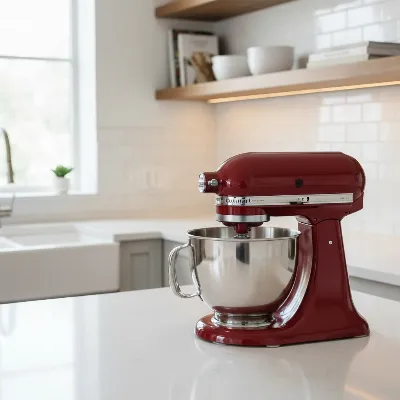 Cuisinart Precision Master Stand Mixer SM-50 in a modern kitchen setting, highlighting its sleek design and color
Performance Test: Putting the Cuisinart Precision Master Through Its Paces
To truly assess the Cuisinart Precision Master, it’s essential to examine its performance across various common baking tasks, from delicate whipping to heavy dough kneading.
Dough Kneading Performance
|
Our Picks for the Best Stand Mixer in 2026
As an Amazon Associate I earn from qualifying purchases.
|
||
| Num | Product | Action |
|---|---|---|
| 1 | Mini Angel Stand Mixer,10-Speed 5QT Kitchen Electric Mixer,Tilt-Head Food Mixer with Dough Hook, Wire Whisk, Flat Beater, Stainless Steel Bowl (Silver) |

|
| 2 | Hamilton Beach Electric Stand Mixer, 4 Quarts, Dough Hook, Flat Beater Attachments, Splash Guard, 7 Speeds with Whisk, Easy-Carry Top Handle, Aqua |
|
| 3 | Cuisinart Stand Mixer, 12 Speed, 5.5 Quart Stainless Steel Bowl, Chef’s Whisk, Mixing Paddle, Dough Hook, Splash Guard w/ Pour Spout, Periwinkle Blue, SM-50TQNAS |
|
| 4 | 8.45 QT All Metal Stand Mixer,10 Speed Large Capacity Kitchen Mixer with Digital Timer & Tilt-Head, Electric Mixer with Whisk Dough Hook Mixing Beater for Baking,Cakes,Cookie,Bread,Salad(Silver) |
|
| 5 | 3-IN-1 Electric Stand Mixer, 6.5QT Bowl 660W 10-Speed Kitchen Mixer, Household Food Mixers include Dough Hook, Beater and Whisk, Bread Cake Mixer for Baking and Most Home Cooks, Green |
|
| 6 | Stand Mixer, 6 QT 600W Tilt-Head Dough Mixer, 6+P speed Mixers Kitchen Electric Stand Mixer with Stainless Steel Bowl, Dishwasher-Safe Dough Hook, Flat Beater, Wire Whisk, Splash Guard, Grey |
|
| 7 | Hamilton Beach Electric Stand Mixer, 4 Quarts, Dough Hook, Flat Beater Attachments, Splash Guard, 7 Speeds with Whisk, Easy-Carry Top Handle, Blue |
|
| 8 | Stand Mixer, 9-Quart Stainless Steel Bowl, 660W Professional Power, Multiple Speed Options, Sturdy Design, Easy to Clean, Lifetime Support, SM-1550(Caramel) |
|
| 9 | Stand Mixer, 6.5QT 10-Speed Tilt-Head Electric Stand Mixer, 3-In-1 Kitchen Mixer with Bowl, Dough Hook, Whisk and Beater, Food Mixer for Baking, Cake and Most Home Cooks, Pink |
|
| 10 | Stand Mixer, 6QT Electric Kitchen Mixer for Baking Cakes & Dough, LED Smart Touchscreen, 11-Speed Tilt-Head & Timer, 4 Presets, Mixer with Bowl, Dough Hook/Whisk/Beater, Green |
|
When it comes to heavier tasks like kneading bread or pizza dough, the Cuisinart Precision Master SM-50 faces some challenges. While its 500-watt motor is powerful, the mixer’s relatively lightweight design (18.4 lbs) can lead to instability. During tests with sticky pizza dough, the mixer was observed to shake, bounce, and even “walk” on the counter at speeds 6 and above, struggling to fully incorporate flour and thoroughly knead the dough. Some unmixed flour was often left at the bottom and sides of the bowl, and a squeaking sound from the motor was noted, suggesting a potential strain on the machine during heavy-duty use.
Whipping and Aerating Capabilities
The Cuisinart Precision Master truly shines in tasks requiring aeration, such as whipping egg whites or heavy cream. Its whisk attachment proved highly effective, even with small quantities. In one test, it successfully whipped a mere 1/4 cup of egg whites to stiff peaks in an acceptable timeframe. The mixer’s ability to achieve desired cream consistency efficiently was also highlighted, proving it a “whipping wizard” capable of producing fluffy results for meringues, soufflés, and whipped cream. Its comparatively quiet operation at lower speeds (around 65 dBA for speed 1, 75 dBA for speed 8) further enhances the experience during these lighter tasks.
Mixing Batter and Light Ingredients
For everyday baking tasks like mixing cake batter or cookie dough, the Cuisinart Precision Master performs adequately, though it often requires user intervention. Reviewers noted that the mixing paddle sometimes leaves unmixed ingredients clinging to the sides and bottom of the tall mixing bowl, necessitating manual scraping with a spatula. While it can produce a very light sponge cake, achieving an even mix often means pausing the machine to scrape down the bowl, especially with smaller batches. For larger quantities, like a 6-egg-based sponge, its 5.5-quart bowl capacity offers ample space, which may reduce the need for constant scraping.
Key Features and Specifications
The Cuisinart Precision Master Stand Mixer (SM-50) is designed with several features aimed at home bakers. Its 5.5-quart stainless steel mixing bowl is generously sized, capable of handling batches large enough for approximately 5 dozen cookies or 6 cups of cream (yielding about 12 cups whipped). The mixer is equipped with a 500-watt motor, offering 12 distinct speed settings for precise control over mixing.
Standard accessories include a flat mixing paddle for batters and doughs, a dough hook for heavier yeast doughs, and a chef’s whisk for aerating ingredients. These attachments are generally made of lightweight metal with a non-stick coating for easy cleaning (the paddle and dough hook are dishwasher safe, while the whisk requires hand-washing). The mixer also includes a two-piece splash guard with a pour spout, designed to minimize mess when adding ingredients during operation. While the splash guard is a useful feature for preventing spills, its two-part design has been noted as somewhat fiddly to install and remove, particularly when needing to access the bowl mid-mix.
Pros and Cons of the Cuisinart Precision Master
Choosing a stand mixer involves weighing its strengths against its weaknesses. The Cuisinart Precision Master SM-50 offers a compelling package for certain users, but it also has limitations.
Advantages
- Affordable Price Point: Positioned as a mid-range option, it’s significantly more budget-friendly than premium brands like KitchenAid, making it an attractive choice for those who don’t want to overspend.
- Quiet Operation: Many users appreciate its relatively quiet performance, especially at lower speeds, contributing to a more pleasant baking environment.
- Large Bowl Capacity: The 5.5-quart stainless steel bowl offers ample space for family-sized batches, reducing the need for multiple mixing rounds.
- Wide Color Selection: With 13 colorways and even patterned designs, it provides numerous aesthetic options to match any kitchen decor.
- Excellent Whipping Performance: The mixer excels at aerating tasks, consistently producing stiff peaks for egg whites and fluffy whipped cream.
- Ease of Use: Its intuitive speed dial and simple tilt-head mechanism contribute to a user-friendly experience, especially for new stand mixer owners.
- Versatile with Attachments: The front attachment hub allows for the addition of optional accessories, expanding its functionality beyond basic mixing.
Disadvantages
- Instability with Heavy Doughs: The lightweight design combined with a powerful motor causes the mixer to shake, bounce, and “walk” on the counter when mixing thick doughs at higher speeds. This can make heavy kneading tasks less efficient and raise concerns about durability.
- Uneven Mixing: The standard mixing paddle may leave unmixed ingredients on the sides and bottom of the bowl, requiring frequent scraping.
- Fiddly Splash Guard: The two-part splash guard, while functional, is often described as awkward to attach, remove, and use, particularly when trying to add ingredients mid-mix.
- Potential Squeaking: Some users have reported a squeaking noise from the motor during high-speed operation, which, while not always affecting performance, can detract from the perceived quality.
- Lack of Flex-Edge Beater Option: Unlike some competitors, Cuisinart does not offer a flex-edge beater attachment for this model, which would help mitigate the uneven mixing issue.
How Does it Compare? Cuisinart Precision Master vs. Competitors
The Cuisinart Precision Master SM-50 often finds itself in comparison with other popular stand mixers, particularly entry-level KitchenAid models, given its similar feature set and more accessible price point. While the Cuisinart offers a powerful 500W motor and a generous 5.5-quart bowl—often exceeding the motor power of some KitchenAid Artisan models in its price bracket—its lighter build is a key differentiator. KitchenAid mixers, known for their robust, heavier construction, typically offer greater stability when handling dense doughs, preventing the “walking” or shaking seen in the Cuisinart.
For tasks like whipping and aerating, the Cuisinart SM-50 competes very well, often praised for its efficiency in creating light, fluffy mixtures. However, for serious bread bakers or those regularly tackling large quantities of stiff dough, a heavier machine from brands like KitchenAid or Bosch might offer a more reliable and less strenuous experience. The Cuisinart positions itself as an excellent mid-range option, providing many of the essential functions and aesthetic appeal of premium mixers without the hefty price tag, making it an attractive “next best thing” for budget-conscious home bakers.
Is the Cuisinart Precision Master Right for You? (Buying Guide)
Deciding if the Cuisinart Precision Master is the ideal mixer for your kitchen comes down to your individual baking habits and priorities.
Determining Your Usage Needs
- How often do you bake? If you’re an occasional baker who enjoys making cookies, cakes, and whipped desserts a few times a month, the Cuisinart Precision Master is likely an excellent fit. Its performance in these areas is strong, and its lighter weight makes it easy to store away when not in frequent use.
- What types of recipes do you typically make? For lighter batters, meringues, and frostings, this mixer excels. However, if your baking repertoire frequently includes heavy, sticky bread doughs, dense whole-wheat recipes, or large batches of stiff cookie dough, you might find its lightweight design and instability at higher speeds to be a source of frustration.
- How many people do you bake for? The 5.5-quart bowl is ample for family-sized portions or entertaining small groups. If you’re regularly baking for one or two people, you might find yourself scraping the sides more often, though it handles smaller batches of egg whites well.
Key Factors to Consider
- Motor Power: The 500-watt motor is robust for most tasks, but its interaction with the lightweight body is crucial.
- Bowl Capacity: 5.5 quarts is a good all-around size for home baking.
- Build Quality & Weight: While its lighter weight is great for storage, consider the trade-off in stability if heavy-duty kneading is a priority.
- Attachments: It includes the essential whisk, paddle, and dough hook. Evaluate if you need more specialized attachments or if the available add-ons (sold separately) meet your future needs.
- Speed Settings: 12 speeds offer fine control, from a very slow stir to a fast whip.
- Ease of Cleaning: The stainless steel bowl is dishwasher-safe, as are the paddle and dough hook, simplifying cleanup. The whisk requires hand washing.
- Budget: Its mid-range price is a significant advantage, offering good value for its capabilities.
- Aesthetics: The wide range of colors and sleek design can complement any kitchen.
If your baking is primarily focused on cakes, cookies, and whipped delights, and you appreciate affordability and a wide color selection, the Cuisinart Precision Master is a solid choice. However, serious bread makers might need to explore heavier, more specialized machines.
Tips for Using and Maintaining Your Cuisinart Precision Master Stand Mixer
Maximizing the lifespan and performance of your Cuisinart Precision Master Stand Mixer involves proper usage and diligent care.
To use your mixer effectively, always ensure the tilt-head is securely locked before starting. Begin at a low speed, especially when incorporating dry ingredients, to prevent clouds of flour. Gradually increase the speed as needed for your recipe. For best results with batters and lighter doughs, be prepared to occasionally pause the mixer and use a spatula to scrape down the sides and bottom of the bowl, ensuring all ingredients are thoroughly combined. When kneading heavy doughs, stay vigilant for any excessive shaking or “walking” of the mixer on the countertop. If it becomes too unstable, consider reducing the speed or kneading by hand for the final stages.
> “While the Cuisinart Precision Master offers great value for everyday baking, remember to respect its limitations, especially when tackling very dense doughs. A little manual scraping can go a long way in achieving perfectly mixed results.” – Chef Austin Merath, Culinary Wizard and Product Tester at Everything Kitchens
Cleaning is straightforward. The mixer’s housing base can be wiped clean with a soft, damp cloth. The 5.5-quart stainless steel bowl, flat mixing paddle, and dough hook are all dishwasher-safe, ideally on the top shelf. However, the wire whisk should always be hand-washed to maintain its delicate structure. Avoid using abrasive cleaners, wire brushes, steel wool, or bleach, as these can damage the finish and components. Regular cleaning after each use will prevent buildup and ensure hygiene. If you notice any squeaking, ensure attachments are properly seated, though some reports indicate it can be a minor motor characteristic. Properly storing the attachments within the bowl is a neat way to keep everything organized and ready for your next baking session.
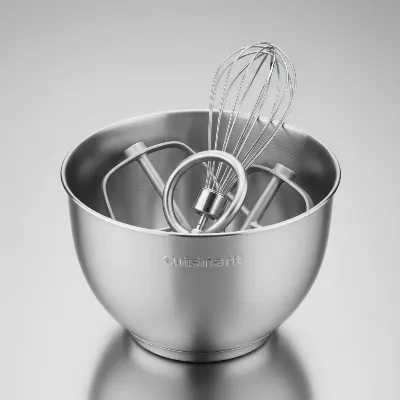 Close-up of Cuisinart Precision Master Stand Mixer attachments, neatly organized in the bowl
Conclusion
The Cuisinart Precision Master Stand Mixer (SM-50) proves itself a worthy contender in the mid-range stand mixer market. It offers a powerful 500-watt motor, a generous 5.5-quart capacity, and excellent performance for whipping and lighter mixing tasks, all wrapped in an attractive, compact design available in a wide array of colors. While its lightweight construction may lead to instability during heavy dough kneading and requires attention to scraping for even mixes, its affordability and versatility make it a compelling choice for many home bakers.
Ultimately, if your baking passion leans towards cakes, cookies, and delightful whipped desserts, and you appreciate a feature-rich appliance that offers great value without the premium price tag, the Cuisinart Precision Master could be your ideal kitchen partner. Are you ready to elevate your baking experience with a mixer that balances performance with practicality?
Frequently Asked Questions
Is the Cuisinart Precision Master Stand Mixer suitable for making bread dough?
While the Cuisinart Precision Master Stand Mixer comes with a dough hook and a powerful 500W motor, its lightweight design can cause it to shake or “walk” on the counter at higher speeds when kneading dense or sticky bread dough. For occasional, lighter bread doughs, it can manage, but serious or frequent bread bakers might find a heavier, more stable mixer more suitable.
What is the capacity of the Cuisinart Precision Master mixing bowl?
The Cuisinart Precision Master Stand Mixer features a generous 5.5-quart stainless steel mixing bowl. This capacity is ample for most home baking needs, allowing you to prepare family-sized batches of cookies (up to 5 dozen) or whip a substantial amount of cream (up to 6 cups of liquid cream, yielding about 12 cups whipped).
Does the Cuisinart Precision Master come with multiple attachments?
Yes, the Cuisinart Precision Master Stand Mixer includes three standard attachments: a flat mixing paddle for batters and doughs, a dough hook for yeast doughs, and a chef’s whisk for aerating ingredients like egg whites and cream. These attachments cover the most common mixing tasks for everyday baking.
Is the splash guard easy to use on this mixer?
The splash guard included with the Cuisinart Precision Master Stand Mixer is a two-part design, which some users find a bit fiddly to attach, remove, and use, especially when trying to add ingredients mid-mix. While it effectively prevents splashes, its ease of use is a common point of feedback.
How does the Cuisinart Precision Master compare in noise level?
The Cuisinart Precision Master is generally considered to be a relatively quiet stand mixer. Tests show it operates around 65 dBA at low speeds and up to 84 dBA at maximum speed, which is comparable to or slightly quieter than some premium competitors, making for a more pleasant baking environment.
