Choosing the perfect stand mixer can feel like a culinary quest, especially when faced with the two dominant designs: tilt-head and bowl-lift. As an experienced technician with a decade immersed in stand mixers, I know that this decision isn’t just about aesthetics; it profoundly impacts your baking experience, efficiency, and the types of recipes you can effortlessly conquer. Whether you dream of effortlessly kneading sourdough or whipping up delicate meringues, understanding the distinct engineering and practical advantages of each style is crucial. This guide will navigate you through every essential detail, ensuring you discover the trusted baking companion that aligns perfectly with your kitchen and culinary ambitions in 2026.
Stand Mixers: Overview and Benefits
A stand mixer is more than just a kitchen appliance; it’s a powerful and versatile tool designed to streamline baking and cooking tasks. Unlike hand mixers, which require constant physical engagement, stand mixers offer hands-free operation, allowing you to multitask while ingredients are expertly combined. This liberation of your hands is a significant advantage, particularly for recipes requiring sustained mixing or gradual ingredient addition.
The benefits of integrating a stand mixer into your kitchen repertoire are extensive. They boast robust motors capable of handling much larger batches and significantly heavier doughs, such as dense bread or pizza dough, which would quickly overwhelm a hand mixer or tire out manual effort. Their planetary mixing action ensures thorough incorporation of ingredients, minimizing unmixed pockets at the bottom of the bowl. Furthermore, many stand mixers feature a power hub, transforming them into multi-functional kitchen centers with attachments for pasta making, meat grinding, and more, vastly expanding their utility beyond basic mixing tasks. They are durable, offer multiple speed settings for precise control, and add a professional touch to any countertop.
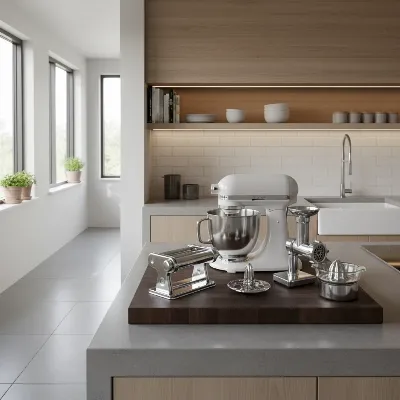 Modern stand mixer in a sleek kitchen, showcasing its versatility with various attachments around it, bright lighting, realistic style
Popular Stand Mixer Types
When stepping into the world of stand mixers, you’ll primarily encounter two main designs: tilt-head and bowl-lift, alongside the more compact hand mixer. Each type caters to different needs, kitchen sizes, and baking frequencies. Understanding their unique mechanics and applications is key to making an informed choice for your home.
Tilt-Head Stand Mixer
The tilt-head stand mixer is perhaps the most recognizable design, characterized by a hinged motor head that tilts back, providing easy access to the mixing bowl and attachments. This design makes it simple to add ingredients, scrape down the sides of the bowl, or switch out accessories mid-recipe. Typically lighter and more compact than their bowl-lift counterparts, tilt-head models often fit more readily under kitchen cabinets, making them a popular choice for smaller kitchens or those with limited counter space.
Advantages:
- Easy Access: The tilting head allows for effortless bowl and attachment removal/insertion, and makes scraping down the bowl straightforward.
- Compact Design: Generally lighter and shorter, these mixers fit under most standard kitchen cabinets (around 14 inches tall), ideal for smaller spaces.
- Aesthetic Variety: Brands like KitchenAid offer an extensive range of colors and finishes, allowing for greater personalization.
- Good for Lighter Tasks: Excellently handles everyday baking tasks like whipping cream, mixing cake batters, cookie doughs, and frostings.
Disadvantages:
- Less Stability for Heavy Loads: During vigorous kneading of thick doughs (like bread), tilt-head mixers can vibrate, “walk” across the countertop, or show signs of strain.
- Lower Power: Most tilt-head models typically have motors in the 300-325 watt range, which can be less effective for very dense mixtures.
- Smaller Capacity: Bowls usually range from 3.5 to 5 quarts, suitable for standard home baking but less ideal for very large batches.
- Counter Space for Tilting: Requires vertical clearance to tilt the head back, which can be an issue under low-hanging cabinets.
|
Our Picks for the Best Stand Mixer in 2026
As an Amazon Associate I earn from qualifying purchases.
|
||
| Num | Product | Action |
|---|---|---|
| 1 | 8.45 QT All Metal Stand Mixer,10 Speed Large Capacity Kitchen Mixer with Digital Timer & Tilt-Head, Electric Mixer with Whisk Dough Hook Mixing Beater for Baking,Cakes,Cookie,Bread,Salad(Silver) |

|
| 2 | Hamilton Beach Electric Stand Mixer, 4 Quarts, Dough Hook, Flat Beater Attachments, Splash Guard, 7 Speeds with Whisk, Easy-Carry Top Handle, Aqua |
|
| 3 | Stand Mixer, 6 QT 600W Tilt-Head Dough Mixer, 6+P speed Mixers Kitchen Electric Stand Mixer with Stainless Steel Bowl, Dishwasher-Safe Dough Hook, Flat Beater, Wire Whisk, Splash Guard, Grey |
|
| 4 | Hamilton Beach Electric Stand Mixer, 4 Quarts, Dough Hook, Flat Beater Attachments, Splash Guard, 7 Speeds with Whisk, Easy-Carry Top Handle, Blue |
|
| 5 | Stand Mixer, 6QT Electric Kitchen Mixer for Baking Cakes & Dough, LED Smart Touchscreen, 11-Speed Tilt-Head & Timer, 4 Presets, Mixer with Bowl, Dough Hook/Whisk/Beater, Green |
|
| 6 | Stand Mixer, 6.5QT 10-Speed Tilt-Head Electric Stand Mixer, 3-In-1 Kitchen Mixer with Bowl, Dough Hook, Whisk and Beater, Food Mixer for Baking, Cake and Most Home Cooks, Pink |
|
| 7 | 3-IN-1 Electric Stand Mixer, 6.5QT Bowl 660W 10-Speed Kitchen Mixer, Household Food Mixers include Dough Hook, Beater and Whisk, Bread Cake Mixer for Baking and Most Home Cooks, Green |
|
| 8 | Stand Mixer, 9-Quart Stainless Steel Bowl, 660W Professional Power, Multiple Speed Options, Sturdy Design, Easy to Clean, Lifetime Support, SM-1550(Caramel) |
|
| 9 | Mini Angel Stand Mixer,10-Speed 5QT Kitchen Electric Mixer,Tilt-Head Food Mixer with Dough Hook, Wire Whisk, Flat Beater, Stainless Steel Bowl (Silver) |
|
| 10 | Cuisinart Stand Mixer, 12 Speed, 5.5 Quart Stainless Steel Bowl, Chef’s Whisk, Mixing Paddle, Dough Hook, Splash Guard w/ Pour Spout, Periwinkle Blue, SM-50TQNAS |
|
Suitable For: The tilt-head mixer is perfect for the casual to moderate home baker who frequently makes cakes, cookies, meringues, and light batters, and appreciates ease of access and a smaller footprint.
Bowl-Lift Stand Mixer
In contrast, bowl-lift stand mixers feature a stationary motor head. Instead, the mixing bowl attaches to sturdy arms and is raised or lowered into position beneath the fixed attachments using a lever mechanism. This robust construction is a hallmark of their design, providing superior stability and power, especially when tackling demanding tasks.
Advantages:
- Superior Stability: The heavier, fixed-head design prevents wobbling or “walking” on the countertop, even with the thickest doughs.
- Higher Power Output: Equipped with more powerful motors, typically ranging from 575 to 600 watts or more, making them ideal for dense bread doughs, large batches, and long mixing times.
- Larger Capacity: Commonly feature bowls ranging from 5 to 7 quarts (or even larger), perfect for preparing big recipes or multiple batches.
- Durability for Heavy Use: Built for heavy-duty, consistent use, often found in professional kitchens, offering exceptional longevity.
Disadvantages:
- Less Direct Access: Adding ingredients or scraping the bowl can be slightly less convenient as you need to lower the bowl or work around the fixed head.
- Larger Footprint: Generally heavier and bulkier, requiring more dedicated countertop space and can be difficult to move or store.
- Higher Noise Level: Stronger motors can sometimes result in more noise during operation, especially under heavy loads.
- Fewer Color Options: Often available in a more limited range of colors compared to tilt-head models, with a more utilitarian aesthetic.
Suitable For: A bowl-lift mixer is the workhorse for serious and frequent bakers, bread enthusiasts, and those who regularly prepare large quantities, prioritizing power, stability, and capacity above all else.
Hand Mixer
While not a “stand mixer” in the traditional sense, hand mixers offer a portable and often budget-friendly alternative for lighter tasks. These handheld devices provide direct control and are excellent for quick jobs that don’t require extensive power or hands-free operation.
Advantages:
- Portability & Storage: Lightweight and compact, hand mixers are easy to move, use in different locations, and store away in a drawer.
- Affordability: Generally much less expensive than stand mixers, making them accessible for occasional bakers or those on a tighter budget.
- Direct Control: Offers precise control over mixing speed and angle, which can be beneficial for delicate tasks like whipping small amounts of cream or mixing in a saucepan.
- Easy Cleanup: With fewer components, cleaning a hand mixer is typically quick and hassle-free.
Disadvantages:
- Limited Power: Motors are less powerful, making them unsuitable for heavy doughs or very thick batters.
- Requires Physical Holding: You must hold the mixer throughout the entire mixing process, which can be tiring for longer tasks or large batches.
- Smaller Capacity: Best suited for small quantities, such as a single batch of cookies or a small amount of whipped cream.
- Fewer Attachments: Typically comes with basic beaters and sometimes dough hooks, but lacks the extensive multi-functionality of stand mixers.
Suitable For: The hand mixer is ideal for occasional bakers, those with very small kitchens, or individuals who primarily perform light, quick mixing tasks and don’t require the power or hands-free convenience of a stand mixer.
Comparing Famous Stand Mixer Brands
The stand mixer market is dominated by a few key players, each bringing their own engineering philosophy and design strengths. When investing in a stand mixer, understanding the nuances between top brands like KitchenAid, Bosch, and Kenwood can guide you to the perfect fit. Each offers unique features, power levels, and capacities, catering to diverse baking needs.
Detailed Comparison Table
Here’s a detailed comparison of popular models from leading stand mixer brands, highlighting their key specifications and general performance insights.
| Feature | KitchenAid Artisan (Tilt-Head) | KitchenAid Professional (Bowl-Lift) | Bosch Universal Plus | Kenwood Chef XL / Titanium Chef |
|---|---|---|---|---|
| Design | Tilt-Head | Bowl-Lift | Bottom-Mounted Motor, Open Bowl | Tilt-Head or Fixed Head (Varies), Planetary |
| Power (Watts) | 300-325W | 575-600W+ | 500-1200W+ (varies by model) | 1000-1500W+ (varies by model) |
| Capacity (Quarts/Liters) | 5 Qt (4.7 L) | 5-7+ Qt (4.7-6.6 L) | 6.5 Qt (6.1 L) | 6.7 L+ (approx. 7 Qt) |
| Bowl Material | Stainless Steel, Glass, Ceramic options | Stainless Steel | Plastic (Stainless Steel optional) | Stainless Steel |
| Primary Use | Everyday baking, lighter doughs | Heavy doughs, large batches, frequent use | Heavy doughs, large batches, versatile | Heavy duty, large batches, cooking (some models) |
| Stability | Good for light-medium, can wobble | Excellent | Excellent, suction feet | Excellent |
| Noise Level | Moderate | Can be louder under load | Moderate to loud | Moderate to loud |
| Attachments | Standard (beater, whisk, dough hook), extensive power hub ecosystem | Standard, power hub ecosystem | Standard (whisk, beater, dough hook), many accessories | Standard, many accessories, some with cooking features |
| Price Range | Mid-High | High | Mid-High | High |
| Unique Features | Iconic design, wide color range | Professional-grade durability, power | Unique open bowl, lightweight motor, fast mixing, easy ingredient addition | High wattage, often integrated weighing scales, some with induction cooking |
| Overall Rating | Versatile, aesthetic, reliable for most tasks | Powerful, durable, workhorse for serious bakers | High capacity, powerful, excellent for bread, unique design | Robust, high performance, good for large families |
KitchenAid: Synonymous with stand mixers, KitchenAid offers both tilt-head (like the popular Artisan series) and bowl-lift (Professional series) models. Their tilt-head mixers are celebrated for their iconic design, vast color choices, and reliability for most home baking tasks. The bowl-lift models are powerhouses, designed for serious bakers tackling dense doughs and large quantities, boasting higher wattage and robust construction. Both types feature a versatile power hub for numerous attachments.
Bosch (Universal Plus): Bosch stands out with its unique bottom-mounted motor design, which results in an open bowl and superior access for adding ingredients without tilting a head. These mixers are surprisingly lightweight for their power, often rated around 500-1200W, and are highly regarded by bread bakers for their ability to handle large quantities of heavy dough effortlessly. While often coming with a plastic bowl as standard, their performance and stability are exceptional, though some find the aesthetics less appealing than other brands.
Kenwood (Chef XL/Titanium Chef): Kenwood mixers are known for their high wattage and large capacities, making them formidable machines for serious bakers and larger families. Models like the Chef XL and Titanium Chef often feature powerful motors (1000-1500W+) and spacious stainless steel bowls (up to 6.7 liters), excelling at mixing large batches and heavy doughs. Some Kenwood models, like the Cooking Chef, even integrate induction heating for cooking directly in the bowl, offering unmatched versatility.
> “The choice of brand often comes down to balancing raw power with design aesthetics and attachment ecosystems. KitchenAid offers unparalleled customization, Bosch provides unmatched dough-kneading efficiency with its unique motor placement, and Kenwood delivers sheer power and capacity for demanding tasks.” – Chef Elena Rodriguez, Culinary Instructor & Bakery Owner
Hướng Dẫn Chọn Mua Stand Mixer Phù Hợp (Buying Guide)
Choosing the ideal stand mixer involves more than just picking a color; it’s about matching the machine’s capabilities to your personal baking habits and kitchen environment. By carefully evaluating your needs and key factors, you can ensure your investment serves you well for years to come.
Xác Định Nhu Cầu Sử Dụng (Determine Your Needs)
Before browsing models, take a moment to reflect on your culinary lifestyle. How frequently do you bake? Do you whip up a batch of cookies once a month, or are you a dedicated bread maker who bakes several loaves weekly? The intensity and regularity of your baking will dictate the necessary power and durability of your mixer.
Consider the number of people you typically cook for. A small family or individual might find a 3.5 to 5-quart tilt-head mixer perfectly adequate, while larger families or those who entertain frequently will benefit from the 6 to 7-quart capacity of a bowl-lift model. Furthermore, think about the types of recipes you often prepare. Light batters for cakes and cookies are well within the capabilities of most tilt-head mixers, but if your passion lies in crafting dense sourdough, pizza dough, or large batches of multi-grain bread, a more powerful bowl-lift or a specialty mixer like the Bosch Universal Plus will be a game-changer.
Các Yếu Tố Cần Quan Tâm (Key Factors to Consider)
Once you’ve assessed your baking profile, delve into the specific features that differentiate stand mixers. Paying attention to these details will ensure you select a machine that not only performs but also fits seamlessly into your kitchen.
- Công suất máy (Power): Measured in watts, power directly correlates with a mixer’s ability to handle tough ingredients. For light to moderate baking (cakes, cookies, frostings), a 300-325 watt motor is sufficient. However, for kneading heavy bread doughs or large batches, opt for a mixer with 500 watts or higher to prevent strain and ensure efficiency.
- Dung tích tô trộn (Bowl Capacity): Mixer bowls typically range from 3.5 to 7 quarts. A 4.5 to 5-quart bowl is a versatile size for most home bakers, handling about 9 dozen cookies or a few loaves of bread. If you frequently double recipes, bake for large gatherings, or make large quantities of bread, a 6 to 7-quart capacity is highly recommended.
- Chất liệu tô trộn và các phụ kiện (Bowl and Attachment Materials): Most bowls are stainless steel, which is durable, non-reactive, and easy to clean. Some tilt-head models offer glass or ceramic bowls for aesthetic appeal, though they are heavier and more fragile. Attachments usually include a flat beater, wire whisk, and dough hook. Ensure the materials are robust; some coated aluminum attachments are dishwasher safe, while uncoated aluminum (like some older whisks) may discolor and should be hand-washed.
- Các tốc độ và chức năng đi kèm (Speeds and Functions): Most stand mixers offer 6 to 10 speeds, providing precise control for various tasks. A slow-start function helps prevent splattering, and a pulse option can be useful for quick bursts of power. Planetary mixing action, where the beater rotates one way and the shaft rotates the other, ensures thorough bowl coverage.
- Độ ồn của máy (Noise Level): While all stand mixers produce some noise, more powerful models, especially bowl-lifts, can be louder under heavy loads. If noise is a significant concern for you, look for reviews that specifically mention quiet operation, though it’s often a trade-off for power.
- Thương hiệu và độ tin cậy (Brand and Reliability): Established brands like KitchenAid, Bosch, and Kenwood have built reputations for durability and performance. Researching warranties and customer service can provide peace of mind for such a significant kitchen investment.
- Giá cả và chính sách bảo hành (Price and Warranty): Stand mixers represent a considerable investment, with prices varying widely. Determine your budget but remember that a higher price often correlates with better motor quality, more durable materials, and longer warranties. A good warranty provides protection against manufacturing defects and can be a strong indicator of a brand’s confidence in its product.
- Kích thước và Trọng lượng (Size and Weight): Consider your available countertop space and how often you’ll need to move the mixer. Tilt-head models are generally more compact, while bowl-lifts are heavier and have a wider footprint. Ensure the mixer’s height, especially for tilt-head models when open, allows it to fit under your cabinets.
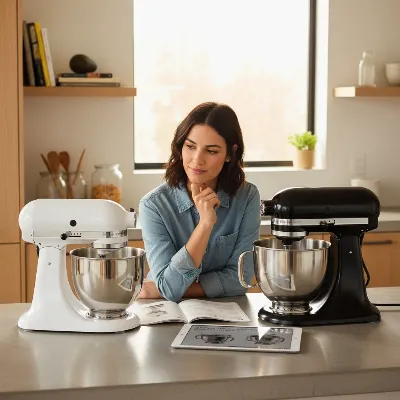 A person evaluating different stand mixer models in a modern kitchen, with focus on size and features, warm lighting, editorial style
Mẹo Sử Dụng và Bảo Quản Stand Mixer (Tips for Using and Maintaining Your Stand Mixer)
Maximizing the lifespan and performance of your stand mixer goes beyond simply plugging it in and turning it on. Proper usage and diligent maintenance are key to ensuring it remains a reliable companion in your kitchen for years to come.
Cách sử dụng Stand Mixer an toàn và hiệu quả (How to Use Your Stand Mixer Safely and Effectively)
For optimal performance and safety, always adhere to a few best practices. First, never overload your mixer beyond its specified capacity, as this can strain the motor and gears, potentially leading to premature wear or damage. Always refer to your user manual for maximum ingredient quantities for different recipes.
Secondly, ensure you use the correct attachment for the task at hand – the flat beater for creaming and mixing, the wire whisk for whipping air into ingredients, and the dough hook for kneading. Matching the attachment to the dough type and speed is crucial to avoid motor overload and achieve the best results. Start your mixer on a low speed to prevent splattering, gradually increasing as needed, and remember to scrape down the sides of the bowl periodically to ensure all ingredients are thoroughly incorporated.
Vệ sinh và bảo quản Stand Mixer đúng cách để kéo dài tuổi thọ (Cleaning and Storing Your Stand Mixer Correctly to Extend its Lifespan)
Regular cleaning and proper storage are fundamental for maintaining your stand mixer. After each use, unplug the mixer and wipe down the motor head and base with a damp cloth and mild dish soap, then dry immediately. Avoid abrasive cleaners or submerging the motor in water, as this can cause severe damage.
Most mixing bowls and coated attachments (like white flat beaters and dough hooks) are typically dishwasher safe. However, aluminum attachments (often identifiable by their matte finish) and wire whips should ideally be hand-washed to prevent discoloration and oxidation (the “yucky black stuff”). Store attachments separately and dry to prevent rust and damage.
Periodically, inspect the power cord for any damage and check that the feet are level for stability. Some manufacturers recommend running the mixer on high (empty) for a minute monthly to redistribute internal grease, which helps prevent “grease weeping”. If you hear grinding noises or notice stiffness, it might be time to re-grease the gearbox every few years, a task that can often be done at home with the right tools and food-grade grease.
Các lỗi thường gặp và cách khắc phục (Common Problems and Solutions)
Even the most reliable stand mixers can encounter minor issues.
- Mixer Won’t Turn On: First, check if it’s securely plugged into a working outlet and that the speed lever is fully engaged. Inspect the power cord for any visible damage. If it hums but doesn’t start, unplug it for ten minutes to reset.
- Strange Noises (Grinding/Stiffness): Grinding sounds often indicate worn-out gears or a need for lubrication. Stop the mixer, clean out any food debris near the gears, and consider re-greasing or professional repair if the noise persists.
- Inconsistent Mixing/Ingredients Sticking to Sides: This can happen if the bowl is overloaded or if the beater-to-bowl clearance needs adjustment. Most mixers allow you to adjust the beater height. For tilt-head mixers, ensure the head is fully locked down. For both types, periodically scraping the bowl with a spatula during mixing helps ensure thorough incorporation.
- Attachments Not Fitting Properly: Over time, attachment pins can get clogged with food debris. Clean the spring and pin where attachments connect, and a small drop of oil can help if they are stiff.
Conclusion
Navigating the choice between tilt-head and bowl-lift stand mixers ultimately boils down to aligning a machine’s inherent design strengths with your individual baking demands. The tilt-head offers convenience, a compact size, and aesthetic appeal, making it a fantastic choice for everyday baking and lighter recipes. Conversely, the bowl-lift design provides unparalleled power, stability, and capacity, proving itself as the steadfast workhorse for avid bread makers and those who tackle large or heavy-duty culinary projects.
While renowned brands like KitchenAid, Bosch, and Kenwood each bring unique innovations to the table, the best stand mixer is truly the one that seamlessly integrates into your kitchen workflow and empowers your creative spirit. By considering factors such as power, capacity, stability, and your specific recipe repertoire, you can confidently invest in a stand mixer that will be a trusted partner in your culinary adventures for years to come. Which stand mixer will be the cornerstone of your kitchen?
Câu Hỏi Thường Gặp
What is the main difference between a tilt-head and bowl-lift stand mixer?
The primary distinction lies in their access method: tilt-head mixers tilt the motor head back to access the bowl, while bowl-lift mixers raise and lower the bowl with a lever, keeping the head stationary. This design difference significantly impacts stability, power, and capacity, with bowl-lifts generally offering more robustness for heavy tasks.
Is a higher wattage motor always better for a stand mixer?
Generally, yes, a higher wattage motor indicates more power, which is beneficial for kneading dense doughs like bread or mixing large batches without straining the motor. For everyday tasks like whipping cream or mixing cake batter, a 300-325 watt motor is usually sufficient, but 500 watts or more is recommended for heavy-duty use.
Can I use a tilt-head mixer for kneading bread dough?
While a tilt-head mixer can knead lighter bread doughs, it may struggle with very dense or large batches. Their motors are less powerful, and the lighter construction can lead to wobbling or “walking” on the counter during prolonged, heavy kneading. For frequent or heavy bread baking, a bowl-lift mixer is generally preferred for its stability and power.
What capacity stand mixer should I buy for a family of four?
For a family of four, a 5-quart (4.7-liter) stand mixer is often an ideal size. It provides enough capacity for most everyday baking tasks, such as making a few dozen cookies or a standard cake recipe. If you frequently bake large quantities or specialized bread, considering a 6-quart model might offer more flexibility.
How often should I clean my stand mixer?
You should wipe down the motor head and base with a damp cloth immediately after each use to prevent food buildup. Bowls and attachments should be washed thoroughly after every use. For internal maintenance, some experts suggest running the mixer empty monthly to redistribute grease, and considering a full re-greasing of internal gears every few years, especially with heavy use.
Are all stand mixer attachments dishwasher safe?
Not all stand mixer attachments are dishwasher safe. Generally, stainless steel bowls and coated attachments (like white flat beaters and dough hooks) are dishwasher safe. However, uncoated aluminum attachments, often identifiable by their matte grey finish, and wire whisks with aluminum components should typically be hand-washed to prevent discoloration and oxidation.
What are some essential accessories for a stand mixer beyond the basic attachments?
Beyond the standard flat beater, wire whisk, and dough hook, many stand mixers, especially KitchenAid models, offer a power hub compatible with a wide array of accessories. Popular essential accessories include a flex edge beater (for thorough scraping), a pasta roller and cutter set, a food grinder for fresh meats and vegetables, and an ice cream maker attachment, greatly expanding the mixer’s culinary utility.
