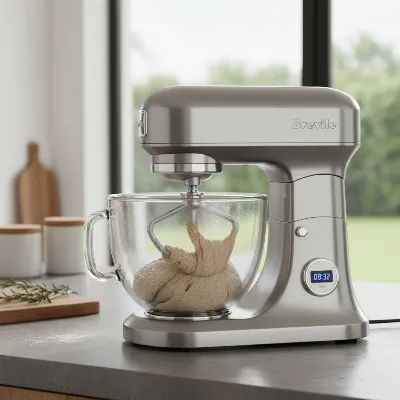
For many, the idea of fresh, homemade pasta conjures images of rustic Italian kitchens and dedicated artisans. Yet, with the right tools, this culinary delight is surprisingly accessible. A versatile stand mixer, paired with a specialized pasta maker attachment, transforms your kitchen into a pasta factory, making it easier than ever to create delicious noodles from scratch. This guide will explore the top stand mixers and their accompanying pasta attachments, helping you choose the perfect setup to elevate your pasta game in 2026.
Stand Mixer: An Essential Kitchen Companion for Culinary Creativity
A stand mixer is far more than just a baking appliance; it’s a powerful and versatile kitchen workhorse designed to streamline numerous cooking tasks. From kneading dense bread doughs to whipping airy meringues, its robust motor and various attachments handle arduous prep work, freeing up your hands and time. The inherent advantage of a stand mixer lies in its consistent power and hands-free operation, ensuring uniform results that are challenging to achieve manually.
When you integrate specialized attachments, the stand mixer truly shines, expanding its utility far beyond basic mixing. This transformative capability makes it an indispensable tool for ambitious home cooks and bakers alike. It reduces physical effort, provides precision, and opens up a world of culinary possibilities, from grinding meats to, yes, making fresh pasta.
The Versatility of Stand Mixer Pasta Attachments
Transforming your stand mixer into a dedicated pasta maker is a game-changer for anyone who appreciates the superior taste and texture of fresh pasta. Unlike cumbersome manual pasta machines that require constant cranking and counter-clamping, stand mixer attachments utilize the mixer’s motor, allowing for effortless dough rolling and cutting. This hands-free operation is a significant advantage, enabling you to guide the pasta dough with both hands, ensuring smooth, even sheets and perfectly formed noodles.
Generally, there are two primary types of pasta attachments: roller and cutter sets, and pasta presses (extruders). Roller and cutter sets typically include a roller for flattening dough into sheets of varying thicknesses, along with separate cutters for popular shapes like spaghetti and fettuccine. Pasta presses, on the other hand, extrude dough through dies to create tubular or more intricate shapes such as bucatini, rigatoni, and fusilli. Both offer distinct advantages, catering to different pasta preferences and culinary aspirations.
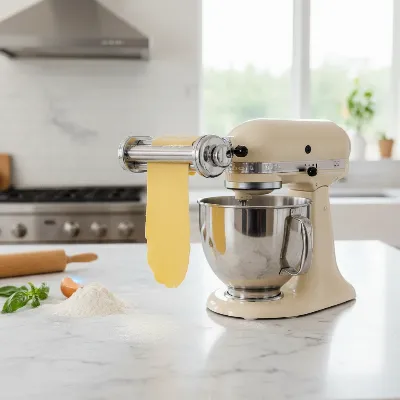 A stand mixer with a pasta roller attachment actively rolling dough into thin sheets, with flour dusting the stainless steel surface, in a bright, clean kitchen. Focus on the smooth motion and the emerging pasta sheet.
Top Stand Mixers for Pasta Making in 2026
Selecting the ideal stand mixer for pasta making often comes down to a balance of power, durability, and attachment compatibility. Several brands excel in this category, offering robust machines that seamlessly integrate with high-quality pasta attachments.
KitchenAid Stand Mixers: The Gold Standard for Pasta Lovers
KitchenAid stands as an iconic brand in the stand mixer market, widely regarded as the top choice for home bakers and pasta enthusiasts. Their mixers, like the popular Artisan Tilt-Head and the more powerful 7-quart Bowl-Lift models, are renowned for their durability, diverse color options, and extensive range of attachments. These mixers typically feature a robust motor and multiple speed settings, providing the consistent power necessary for processing pasta dough effectively.
- KitchenAid Pasta Roller and Cutter Set (KSMPRA): This 3-piece stainless steel set is a “must-have” for many, including a pasta roller with eight thickness settings and cutters for spaghetti and fettuccine. It’s celebrated for its ease of use, allowing users to roll out perfect pasta sheets and cut uniform noodles efficiently without manual effort. It’s an excellent starting point for beginners.
- KitchenAid Gourmet Pasta Press (KSMPEXTA): For those desiring extruded pasta shapes, this press is a fantastic addition. It comes with six stainless steel plates to create bucatini, rigatoni, fusilli, and large and small elbow macaroni. While users enjoy the fun and ease of making unique shapes, some note that certain extruded shapes might be thicker than expected, and fusilli may require manual twisting.
- Other KitchenAid Pasta Attachments: KitchenAid also offers a comprehensive 5-piece Pasta Deluxe Set (KSMPDX) that includes the roller and cutters for spaghetti, fettuccine, capellini, and lasagnette. Additionally, third-party attachments like the Antree pasta maker, compatible with most KitchenAid models, offer similar functionalities with eight thickness settings.
> “The KitchenAid pasta attachment is intuitive, and after a few uses, I felt confident. While I was happy to use it on my own, without any distraction, I can see that it would be good fun to get friends and family involved.” – Tom’s Guide Reviewer, describing their experience with KitchenAid’s pasta maker
Bosch Universal Plus Stand Mixers: Power and Performance for Serious Bakers
The Bosch Universal Plus stand mixer is highly favored by serious home bakers, particularly those who frequently work with large or heavy doughs. Its unique bottom-drive motor design offers exceptional power and stability, capable of kneading up to 14 pounds of dough effortlessly. This robust performance makes it an excellent choice for pasta making, ensuring the mixer remains steady even when processing dense pasta dough.
Bosch offers a range of attachments, including a dedicated pasta maker, which leverages the mixer’s strong motor for efficient dough handling. Users appreciate the unobstructed bowl, which simplifies adding ingredients, and the efficient mixing action, often described as a “3D movement” that thoroughly incorporates all components. While specific details on Bosch’s pasta attachments are less prevalent than KitchenAid’s, their mixers’ underlying power and durability make them a reliable foundation for any pasta-making endeavor.
Cuisinart Precision Master Stand Mixers: A Budget-Friendly Option with Attachments
Cuisinart’s Precision Master SM-50 stand mixer presents a compelling option for those seeking a major brand name without the premium price tag of some competitors. Cuisinart offers pasta roller and cutter attachments that connect to their stand mixers, allowing for the creation of various homemade pasta shapes, including fettuccine and spaghetti.
Reviews for Cuisinart’s pasta attachments generally highlight their good quality, sturdy construction, and ease of use, especially for new pasta makers. However, some users note a significant downside: difficulty in cleaning the attachments, as they cannot be washed with water or soap. Additionally, the Cuisinart Precision Master mixer itself has been described as lightweight, with some instances of it moving or “bouncing around” when mixing at higher speeds or with very thick doughs. Despite these considerations, it remains a viable option for occasional pasta makers.
How to Choose the Right Stand Mixer with Pasta Attachment
Selecting the perfect stand mixer and pasta attachment requires careful consideration of your specific needs and preferences. With numerous options available, focusing on key aspects will ensure you make an informed decision.
Evaluate Your Pasta Making Needs
Before diving into specifications, think about your typical pasta habits. How often do you plan to make pasta? If it’s a weekly ritual for a large family, you’ll need a more robust system than someone who enjoys fresh pasta only occasionally. What types of pasta do you prefer? If spaghetti and fettuccine are your staples, a basic roller and cutter set might suffice. However, if you crave unique extruded shapes like bucatini or fusilli, a pasta press attachment becomes essential. The batch size you typically prepare will also influence the mixer’s bowl capacity and the attachment’s efficiency.
Stand Mixer Features to Consider
The stand mixer itself is the foundation of your pasta-making setup. Its capabilities directly impact the performance of any attachment.
- Motor Power and Durability: For kneading dense pasta dough, a powerful motor (e.g., 300W-600W or higher) is crucial to prevent strain and ensure longevity. Brands like KitchenAid and Bosch are known for their durable motors that can handle demanding tasks.
- Bowl Capacity and Style (Tilt-Head vs. Bowl-Lift): Bowl capacities typically range from 3.5 to 7 quarts. A larger bowl is ideal for bigger batches, while smaller bowls are sufficient for individual or small family portions. Tilt-head mixers offer easy access to the bowl and attachments, while bowl-lift models provide greater stability and are often associated with more powerful motors, suitable for heavier loads.
- Speed Settings and Control: Multiple speed settings allow for precise control over the mixing process, from gently combining ingredients to vigorously kneading dough. Look for models with a wide range of speeds and possibly a slow-start feature to prevent splattering.
- Compatibility with Attachments: Most premium stand mixers, especially KitchenAid, offer a universal power hub that accommodates a vast array of proprietary and third-party attachments. Verify that the pasta attachments you desire are compatible with your chosen mixer model.
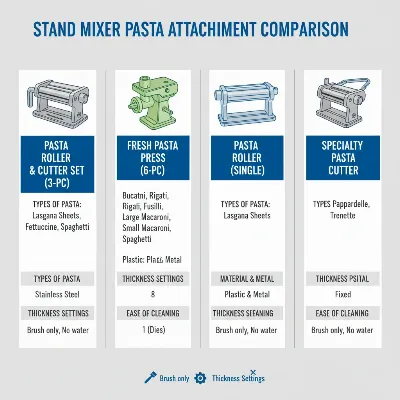 An illustrative infographic comparing key features of different pasta maker attachments for stand mixers, showing icons for pasta types, material, and cleaning.
Pasta Attachment Specifics
Beyond the mixer, the attachment itself dictates the quality and variety of your homemade pasta.
- Material (Stainless Steel vs. Plastic): Stainless steel attachments are generally more durable, heavier, and often considered premium, made in Italy for brands like KitchenAid. Plastic versions might be more budget-friendly but could lack the same robustness.
- Types of Pasta Shapes (Rollers/Cutters vs. Extruders): Decide whether you want flat noodles (spaghetti, fettuccine, lasagna) made by rollers and cutters, or extruded shapes (macaroni, rigatoni, bucatini) from a press. Many cooks start with a roller and cutter set and later add an extruder for more variety.
- Ease of Cleaning: This is a crucial, yet often overlooked, factor. Pasta attachments usually cannot be submerged in water. Many manufacturers recommend letting dough residue dry and then cleaning with a brush or pick tool. Some brands like Cuisinart specifically caution against water cleaning, which can be challenging.
- Price and Value: Pasta attachments vary in price significantly. Consider the overall value, factoring in durability, versatility, and the quality of the pasta they produce. Investing in a well-made attachment often pays off in the long run.
Tips for Using and Maintaining Your Stand Mixer Pasta Attachment
Mastering fresh pasta with your stand mixer is rewarding, and a few tips can ensure success and longevity for your equipment.
- Preparing the Dough: The consistency of your pasta dough is paramount. It should be firm, not sticky, and well-rested before rolling. Proper flouring of your dough and the attachment itself prevents sticking and ensures smooth operation. Too wet, and it will gum up; too dry, and it will crumble.
- Operating the Attachments: When using roller attachments, start with the widest setting and gradually decrease the thickness, feeding the dough through multiple times at each setting. This laminates the dough, improving its texture and strength. For extruder attachments, ensure dough pieces are small enough to feed through the hopper without clogging.
- Cleaning and Storage: Most pasta attachments are not dishwasher safe and should not be washed with water. The best method is to let any leftover dough dry on the attachment for about an hour, then use the provided cleaning brush and pick tool to remove all residue. Store attachments in a dry place to prevent rust or damage.
- Troubleshooting Common Issues: If dough sticks, it’s likely too wet or not floured enough. If the mixer struggles, the dough might be too stiff, or you’re trying to process too much at once. Refer to your mixer and attachment manuals for specific troubleshooting steps.
Conclusion
The journey into homemade pasta is a delightful one, and with the right stand mixer and pasta attachment, it becomes an effortless and incredibly rewarding experience. Brands like KitchenAid lead the way with a range of highly-rated, durable attachments for various pasta styles, while Bosch offers unparalleled power for heavy-duty dough tasks, and Cuisinart provides accessible options. By considering your individual needs for pasta shapes, frequency of use, and essential features like motor power and ease of cleaning, you can confidently select a stand mixer and attachment that will serve as a trusted companion in your culinary adventures.
Ready to transform your kitchen into a pasta paradise? What fresh pasta creation will you embark on first?
Frequently Asked Questions
What are the main types of pasta attachments for stand mixers?
The primary types are pasta roller and cutter sets, which flatten dough into sheets and cut traditional noodles like spaghetti and fettuccine, and pasta presses (extruders), which push dough through dies to create shapes such as bucatini, rigatoni, and macaroni.
Can I use any brand of pasta attachment with my stand mixer?
Generally, no. Most pasta attachments are brand-specific due to proprietary power hubs and fitting designs. KitchenAid, for example, has a universal hub, but its attachments are designed for its mixers. Always check compatibility before purchasing.
How do I clean my stand mixer pasta attachments?
Most pasta attachments should not be washed with water. It’s recommended to let any residual dough dry on the attachment for approximately one hour. Once dry, use a small brush or pick tool (often included) to remove the hardened dough.
Is a more powerful stand mixer necessary for pasta making?
While a basic Stand Mixer can handle light tasks, a more powerful mixer (e.g., 300W-600W) is highly recommended for pasta making. Kneading stiff pasta dough puts a significant strain on the motor, and a robust mixer ensures efficiency and prolongs the appliance’s lifespan.
What’s the difference between tilt-head and bowl-lift stand mixers for pasta making?
Tilt-head mixers offer easier access to the bowl and attachments but may have less power or stability with very heavy doughs. Bowl-lift mixers, often more powerful and stable, are preferred for large batches of dense dough like pasta, as the bowl lifts to meet the mixing mechanism.