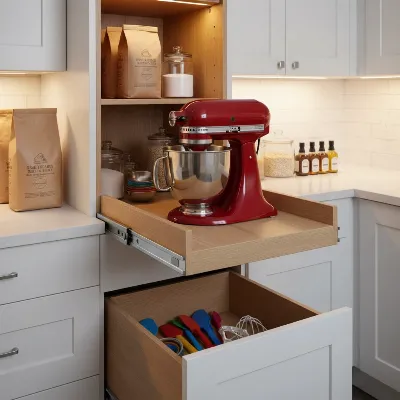
For passionate home bakers and culinary enthusiasts who frequently tackle generous batches of cookies, loaves of artisan bread, or elaborate cakes for special occasions, a large capacity stand mixer is an indispensable kitchen companion. Moving beyond the limitations of hand mixing, these powerful machines elevate your baking experience, saving time and effort while ensuring consistent, professional-quality results. If your current mixer struggles with dense doughs or overflowing bowls, it’s time to explore the robust world of mixers designed for serious volume.
Stand Mixer: Overview and Benefits
A stand mixer is a dedicated kitchen appliance that uses planetary mixing action to thoroughly combine ingredients. Unlike hand mixers, which require constant manual guidance, a stand mixer operates hands-free, allowing you to multitask while it efficiently performs the strenuous work of kneading, whipping, and beating. This hands-off approach is a game-changer for anyone who spends significant time in the kitchen.
The benefits of upgrading to a large capacity stand mixer are particularly evident when you’re preparing big batches. These machines boast more powerful motors and robust construction, effortlessly handling tasks that would strain smaller models or your own arms. From developing gluten in stiff bread dough to creaming butter and sugar for multiple dozens of cookies, a large capacity mixer provides the necessary muscle and space. It ensures uniform mixing, prevents ingredient splattering, and drastically reduces prep time, transforming daunting recipes into enjoyable culinary projects.
Types of Stand Mixers for Large Batches
When selecting a stand mixer, especially for handling large quantities, the design type significantly impacts performance and usability. The primary distinction lies between tilt-head and bowl-lift models, each suited to different baking styles and needs.
Bowl-Lift Stand Mixer
Table is empty.Bowl-lift stand mixers are the workhorses of the baking world, widely recognized for their superior power and stability, making them ideal for large batches and dense ingredients. Instead of the head tilting back, the mixing bowl securely locks onto arms that are then raised into mixing position by a lever. This fixed head design and heavier base provide excellent stability, preventing the mixer from “walking” across the counter even when kneading heavy doughs like sourdough or whole wheat. These models typically feature higher wattage motors and are designed to withstand sustained, demanding use.
While offering unmatched power and capacity, bowl-lift mixers tend to be taller, requiring more vertical clearance under kitchen cabinets. Adding ingredients can sometimes be slightly less convenient compared to tilt-head models, as you might need to pour from the side. However, for those who regularly bake large volumes of bread, pizza dough, or multiple batches of cookies, the enhanced stability and raw power make a bowl-lift stand mixer an invaluable investment.
Tilt-Head Stand Mixer
Tilt-head stand mixers are the most common type for home use, characterized by a head that tilts back to allow easy access to the bowl and attachments. This design is praised for its convenience when adding ingredients or scraping down the sides of the bowl. They are generally shorter and lighter than bowl-lift models, making them a better fit for kitchens with limited counter space or lower cabinet clearance.
However, for truly large capacities and very dense mixtures, tilt-head models can be less powerful and stable compared to their bowl-lift counterparts. While many tilt-head mixers offer capacities up to 5 or 5.5 quarts, the maximum effective volume for very thick doughs might be lower to avoid motor strain or excessive shaking. If your “large batches” are mostly lighter batters or medium-sized cookie doughs, a larger tilt-head model might suffice, but for consistent heavy-duty kneading, a bowl-lift is often preferred.
Comparing Top Large Capacity Stand Mixer Brands
Choosing the right large capacity stand mixer means looking beyond just the brand name to understand the specific models, their power, capacity, and unique features. Here’s a comparison of some of the leading contenders designed to handle big batches.
Detailed Comparison Table
| Brand/Model | Capacity (Quarts/Liters) | Power (Watts/HP) | Key Features & Attachments | Price Range (Approx.) | Best For |
|---|---|---|---|---|---|
| KitchenAid 7-Quart Bowl-Lift | 7 Quarts | 500W | Double flex edge beater, wire whip, dough hook, flat beater, 11 speeds, durable construction. [cite: 1, 1_fetch] | $650 – $700 | Serious home bakers, large family meals, heavy doughs, versatile use. |
| Ankarsrum Assistent Original | 7 Quarts | High wattage | Unique dough roller & knife, open-top design, rotating bowl from below, quiet operation, built-in timer. [cite: 1, 4_fetch] | $700 – $800 | Dedicated bread bakers, sourdough, large quantities of heavy dough. |
| Ooni Halo Pro Spiral Mixer | 7.3 Quarts / 7.3 Liters | 650W | Spiral dough hook, breaker bar, rotating bowl for dual kneading, 58 precision speeds, quiet, temperature management. [cite: 2, 5_fetch] | $650 – $700 | Artisan bread makers, pizza dough, highly specialized for dough development. |
| Bosch Universal Plus Mixer | 6.5 Quarts | Powerful Motor | Unique center column drive, suction cups for stability, versatile dough hook, open-top design. [cite: 5_fetch] | $400 – $500 | Bread baking, heavy doughs, ease of cleaning, compact footprint relative to capacity. |
| Kenwood Titanium Chef Baker XL | 6.7 Liters | 1400W | In-built scales, comes with two bowls, powerful motor, gentle acceleration, various attachments. | $400 – $600 | Batch baking, advanced pastry work, precise ingredient measurement. |
| ProCook Stand Mixer | 7.3 Liters | 1800W | Very high wattage, strong suction feet, beater, balloon whisk, dough hook. | $250 – $300 | Budget-conscious power users, large volume mixing, general baking tasks. |
> “KitchenAid’s 7-Quart Bowl-Lift Stand Mixer is a game-changer for large batches, offering higher wattage than tilt-head models for a more powerful, stable performance with thick batters and dough.”
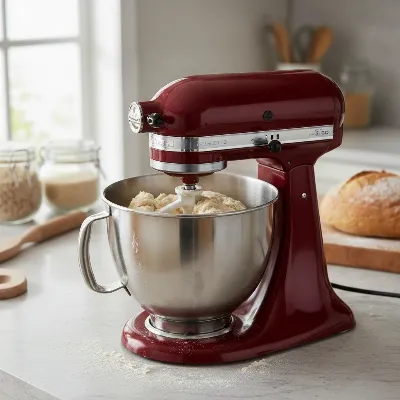 KitchenAid 7-Quart Bowl-Lift Stand Mixer kneading dough in a large stainless steel bowl
Guide to Choosing the Right Large Capacity Stand Mixer
Selecting the perfect large capacity stand mixer is a significant decision that impacts your baking efficiency and enjoyment. It’s crucial to align the mixer’s capabilities with your specific culinary habits and kitchen environment.
Defining Your Baking Needs
Before diving into specifications, honestly assess your baking routine. Do you frequently bake for a large family, host gatherings, or prepare food in bulk? For instance, if you consistently bake multiple loaves of bread, double batches of holiday cookies, or large cakes, a mixer with a minimum 6-quart capacity is advisable. Consider the types of recipes you make; dense bread doughs demand more power and stability than light cake batters, directly influencing the motor strength and mixer type you should consider.
Key Factors to Consider
- Motor Power and Durability: Look beyond just the wattage. While high wattage (e.g., 500W+ for home use, 800W+ for light commercial) is a good indicator, it’s the motor’s ability to maintain speed under heavy load and its torque that truly matter for dense doughs. A durable, gear-driven system ensures longevity and consistent performance. [cite: 2_fetch, 4_search]
- Bowl Capacity: As a general rule, 6 to 8-quart bowls are ideal for serious home bakers. Some brands, like KitchenAid, highlight “flour power” – the maximum amount of flour a mixer can handle – which is a more useful metric than just bowl size for bread bakers. [cite: 5_search]
- Attachments: Most large capacity mixers come with a flat beater, wire whisk, and dough hook. For bread making, a spiral knead dough hook is particularly effective for large quantities as it prevents dough from climbing and ensures thorough kneading. [cite: 3_search]
- Stability and Construction: For heavy-duty tasks, a robust, all-metal construction is paramount. Bowl-lift designs generally offer superior stability due to their fixed head and heavier base, preventing movement during intense mixing. Look for strong suction feet on models with lighter bases.
- Speed Settings: A wide range of speed settings, ideally 6 to 11, provides versatility for different tasks, from gentle stirring to rapid whipping. A “soft start” feature helps prevent ingredients from splattering at the beginning of mixing. [cite: 2_fetch]
- Noise Level: Powerful motors, especially in high-wattage mixers, can sometimes be noisy. If a quiet kitchen is important to you, seek out reviews that comment on operational noise levels. The Ankarsrum is noted for its quiet operation. [cite: 4_fetch]
- Footprint and Storage: Large capacity mixers, especially bowl-lift models, can be tall and heavy, requiring dedicated counter space. Measure your available space, including the height under cabinets, to ensure a comfortable fit.
- Budget and Warranty: Investing in a quality stand mixer is a long-term commitment. While price points vary, a solid warranty indicates manufacturer confidence in durability. Consider what fits your budget while still meeting your core needs for power and capacity.
Tips for Using and Maintaining Your Large Capacity Stand Mixer
A large capacity stand mixer is a significant investment, and proper usage and maintenance are key to ensuring its longevity and optimal performance. Treating your mixer with care will allow it to be a dependable kitchen partner for many years.
To use your stand mixer safely and effectively, always ensure the bowl and attachments are correctly secured before operation. Avoid overfilling the bowl, especially with lighter ingredients like whipped cream or meringue, as this can hinder proper aeration. For dense doughs, you can typically fill the bowl up to about 95% capacity, but be mindful of the strain on the motor. [cite: 5_search] When adding ingredients, especially flour, start at the lowest speed to prevent clouds of dust and gradually increase as components are incorporated. Always consult your mixer’s manual for specific instructions on capacity limits for various mixtures and recommended speed settings for different attachments.
For cleaning and care, detach all removable parts immediately after use. Most bowls and standard attachments (flat beater, dough hook, wire whisk) are dishwasher safe, but always check your manufacturer’s instructions. Wipe down the mixer head and body with a damp cloth, ensuring no food particles or liquid seep into the motor housing. For dough hooks, especially after kneading sticky bread dough, a stiff brush can help remove residue before washing. Proper ventilation during long mixing tasks is also important to prevent motor overheating. Regular cleaning not only maintains hygiene but also prevents buildup that could affect the mixer’s performance over time.
Conclusion
Choosing the best large capacity stand mixer is about more than just a purchase; it’s about investing in a powerful ally that transforms your baking. These robust machines empower you to tackle extensive baking projects, from multiple batches of sourdough to dozens of cookies, with unprecedented ease and efficiency. By focusing on essential factors like motor power, bowl capacity, stability, and the right attachments, you can confidently select a mixer that not only fits your kitchen but also elevates your culinary creations. With its ability to handle heavy loads and simplify complex tasks, a large capacity stand mixer is truly a foundational tool for any serious baker looking to expand their repertoire and create big batches with professional results. Which large capacity stand mixer will you choose to be your next baking partner?
Frequently Asked Questions
What is considered a large capacity stand mixer?
Generally, a stand mixer with a bowl capacity ranging from 6 to 8 quarts (approximately 5.6 to 7.6 liters) is considered large capacity for home use. These sizes are ideal for baking multiple loaves of bread, double batches of cookies, or cakes for larger gatherings. [cite: 1_search]
Can I make small batches in a large capacity stand mixer?
Yes, you can absolutely make small batches in a large capacity stand mixer. While they excel at big tasks, these mixers are versatile enough for smaller recipes. However, you might find that ingredients sometimes get pushed to the bottom or sides of the bowl, requiring more frequent scraping to ensure thorough mixing.
What attachments are essential for large capacity stand mixers?
For large capacity stand mixers, the essential attachments include a flat beater (for batters and cookie dough), a wire whisk (for whipping cream and egg whites), and a dough hook (for kneading bread and pizza dough). For serious bread bakers, a spiral dough hook, often found with bowl-lift models, is highly beneficial for handling heavy dough. [cite: 1_fetch, 3_search]
How many watts should a large stand mixer have for bread dough?
For effectively kneading dense bread dough in a large capacity Stand Mixer, a motor with at least 500 watts is recommended for home use. However, it’s not solely about wattage; the mixer’s torque and its ability to maintain speed under heavy load are equally crucial for preventing motor strain and ensuring thorough mixing. [cite: 2_fetch]
What is the difference between bowl-lift and tilt-head for large capacities?
For large capacities, bowl-lift mixers are generally preferred due to their superior stability and power. Their fixed head design and heavier construction prevent movement during heavy-duty mixing. Tilt-head mixers, while convenient for smaller tasks, can be less stable and powerful when dealing with very large or dense batches.