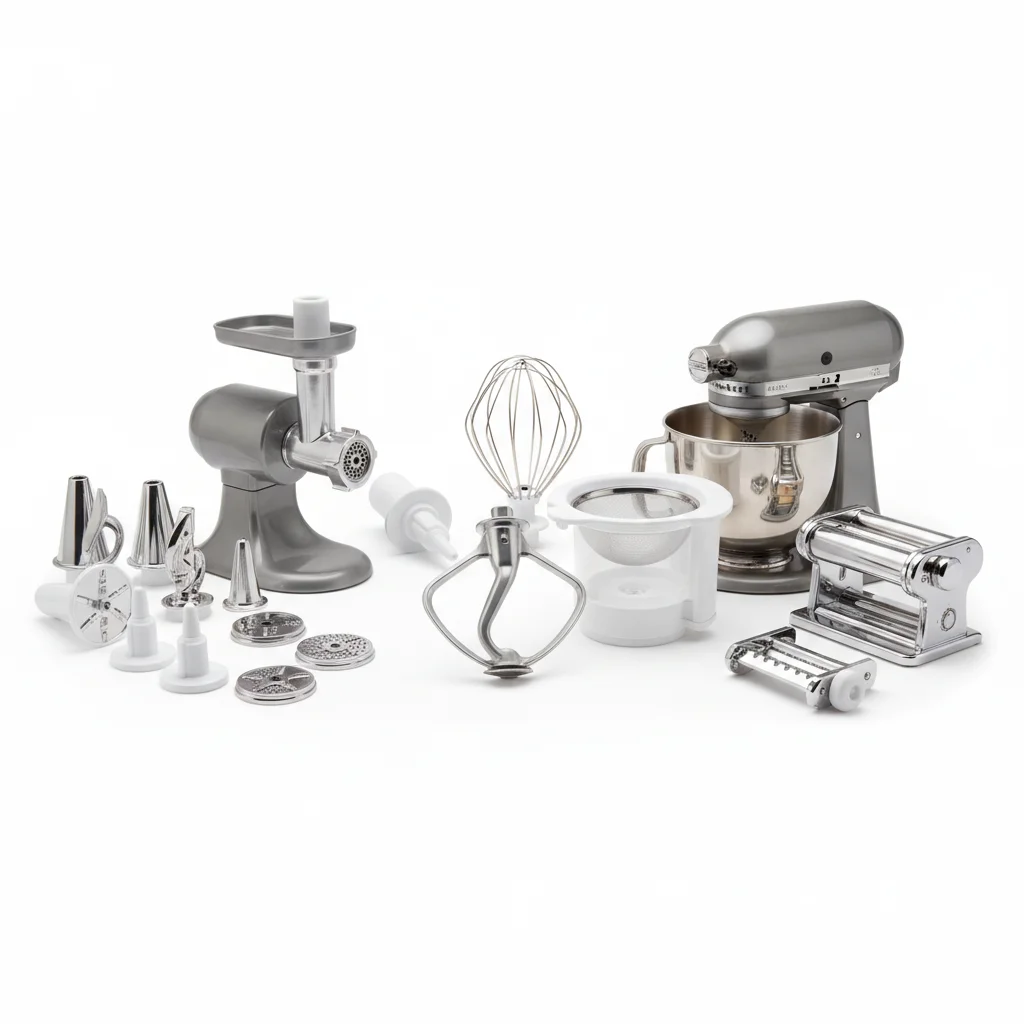
No, not all stand mixer attachments fit KitchenAid mixers. While KitchenAid offers a wide range of proprietary attachments designed specifically for their machines, and many third-party manufacturers produce compatible accessories, there are also numerous attachments from other stand mixer brands that are not cross-compatible. The key factor is the power hub design and the specific locking mechanism, which varies significantly between manufacturers.
Understanding KitchenAid’s Power Hub
KitchenAid stand mixers are renowned for their versatile power hub, a universal connection point located at the front of the mixer head. This hub is designed to accept a variety of attachments, from pasta makers to food grinders, all powered by the mixer’s motor. The design of this hub, including its shape and the way attachments lock into place, is unique to KitchenAid. This standardization across most KitchenAid models (excluding some older or very specific commercial units) is what allows for such a broad ecosystem of compatible accessories.
Third-Party Compatibility for KitchenAid
Many third-party manufacturers recognize the popularity of KitchenAid mixers and produce attachments specifically designed to fit their power hub. These can often offer more specialized functions or a more budget-friendly alternative to genuine KitchenAid accessories. When purchasing third-party attachments, it’s crucial to verify that they explicitly state compatibility with KitchenAid stand mixers. Look for phrases like “compatible with KitchenAid mixers” or “designed for KitchenAid power hub” to ensure a proper fit and safe operation.
Why Other Brands’ Attachments Don’t Fit
|
Our Picks for the Best Stand Mixer in 2026
As an Amazon Associate I earn from qualifying purchases.
|
||
| Num | Product | Action |
|---|---|---|
| 1 | Mini Angel Stand Mixer,10-Speed 5QT Kitchen Electric Mixer,Tilt-Head Food Mixer with Dough Hook, Wire Whisk, Flat Beater, Stainless Steel Bowl (Silver) |

|
| 2 | Stand Mixer, 6.5QT 10-Speed Tilt-Head Electric Stand Mixer, 3-In-1 Kitchen Mixer with Bowl, Dough Hook, Whisk and Beater, Food Mixer for Baking, Cake and Most Home Cooks, Pink |
|
| 3 | 3-IN-1 Electric Stand Mixer, 6.5QT Bowl 660W 10-Speed Kitchen Mixer, Household Food Mixers include Dough Hook, Beater and Whisk, Bread Cake Mixer for Baking and Most Home Cooks, Green |
|
| 4 | Stand Mixer, 6 QT 600W Tilt-Head Dough Mixer, 6+P speed Mixers Kitchen Electric Stand Mixer with Stainless Steel Bowl, Dishwasher-Safe Dough Hook, Flat Beater, Wire Whisk, Splash Guard, Grey |
|
| 5 | 8.45 QT All Metal Stand Mixer,10 Speed Large Capacity Kitchen Mixer with Digital Timer & Tilt-Head, Electric Mixer with Whisk Dough Hook Mixing Beater for Baking,Cakes,Cookie,Bread,Salad(Silver) |
|
| 6 | Hamilton Beach Electric Stand Mixer, 4 Quarts, Dough Hook, Flat Beater Attachments, Splash Guard, 7 Speeds with Whisk, Easy-Carry Top Handle, Blue |
|
| 7 | Stand Mixer, 9-Quart Stainless Steel Bowl, 660W Professional Power, Multiple Speed Options, Sturdy Design, Easy to Clean, Lifetime Support, SM-1550(Caramel) |
|
| 8 | Cuisinart Stand Mixer, 12 Speed, 5.5 Quart Stainless Steel Bowl, Chef’s Whisk, Mixing Paddle, Dough Hook, Splash Guard w/ Pour Spout, Periwinkle Blue, SM-50TQNAS |
|
| 9 | Stand Mixer, 6QT Electric Kitchen Mixer for Baking Cakes & Dough, LED Smart Touchscreen, 11-Speed Tilt-Head & Timer, 4 Presets, Mixer with Bowl, Dough Hook/Whisk/Beater, Green |
|
| 10 | Hamilton Beach Electric Stand Mixer, 4 Quarts, Dough Hook, Flat Beater Attachments, Splash Guard, 7 Speeds with Whisk, Easy-Carry Top Handle, Aqua |
|
Other stand mixer brands, such as Cuisinart, Breville, or Smeg, have their own unique attachment systems. These often involve different power take-off points, varying shaft sizes, or entirely different locking mechanisms. For example, some mixers might have a top-mounted accessory port, while others might integrate attachments directly into the bowl drive. These fundamental design differences prevent direct interchangeability with KitchenAid attachments. Attempting to force an incompatible attachment can damage both the mixer and the accessory, and may void warranties.
Key Considerations for Attachment Purchases
- Always check the product description for explicit compatibility with your specific stand mixer brand and model.
- Prioritize attachments from reputable brands, whether genuine or third-party, to ensure quality and safety.
- Consider the type of baking or cooking you do most frequently to determine which attachments will offer the most value.
- Read reviews from other users to gauge real-world performance and fit.
- Be aware that some very old or niche KitchenAid models might have slight variations in their power hub, so double-checking is always wise.
The Benefits of KitchenAid’s Ecosystem
While not universally compatible, the KitchenAid attachment ecosystem is one of its greatest strengths. It allows bakers and home cooks to expand the functionality of a single appliance significantly, turning a stand mixer into a multi-purpose kitchen machine. This versatility can save counter space and reduce the need for multiple single-function gadgets. Investing in a range of compatible attachments can truly transform your culinary capabilities, from making fresh pasta to grinding your own meat or even making ice cream.
Get our weekly buyer guide
Practical specs, not advice. Unsubscribe anytime.

This was super helpful! I’ve always wondered about the compatibility of different attachments. It’s good to know that while many third-party options exist, you still need to be careful about the specific locking mechanism. I’m looking to get a new food grinder soon, and I’ll definitely be checking for KitchenAid compatibility now.
I appreciate the info on the locking mechanism. I tried to use an old meat grinder attachment from a different brand I used to own, thinking it might just ‘fit’ since it looked similar. Nope, it definitely didn’t work with my KitchenAid. It’s a bit frustrating that they’re not more universal, but I guess that’s how it goes. Wish I’d known before I tried forcing it.
I was so confused about which attachments would work with my KitchenAid, especially after seeing so many different brands online. This really cleared things up about the power hub design. I ended up getting a third-party pasta maker, and it fits perfectly and works like a charm. No issues at all, and it saved me a bit of money compared to the official KitchenAid one.
I’ve been a KitchenAid user for years and love the versatility of the power hub. I’ve got the official ice cream maker and a few other attachments, but I was curious about other brands. It’s reassuring to know that many third-party manufacturers do make compatible accessories. It opens up a lot more options for expanding my baking tools.