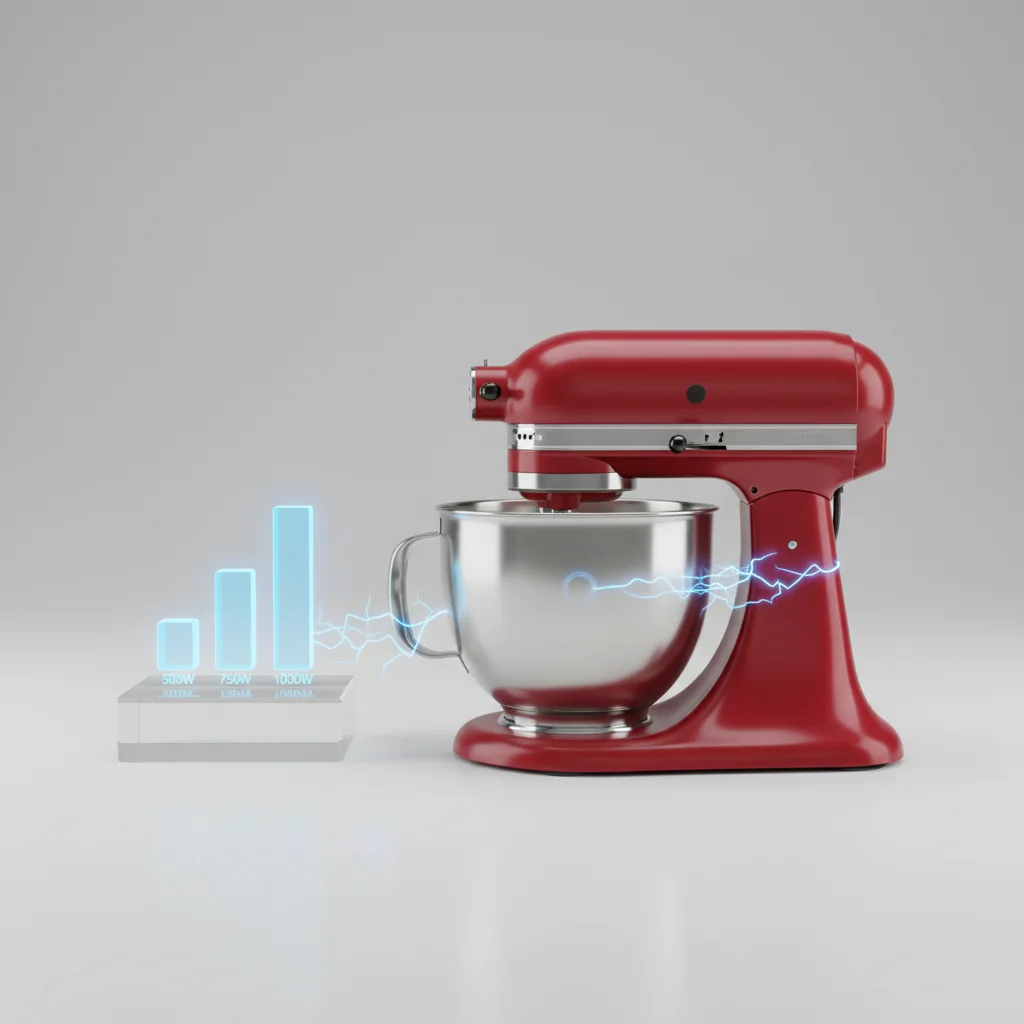
For most home bakers, a stand mixer with a motor wattage between 300 and 500 watts is ideal, offering a good balance of power for everyday tasks like mixing cookie dough and whipping cream, while also being capable of handling denser bread doughs. Understanding stand mixer motor wattage is crucial for selecting a machine that can handle your specific baking tasks efficiently and without strain.
Why Motor Wattage Matters for Stand Mixers
The wattage of a stand mixer’s motor directly correlates to its power and ability to handle various ingredients. Higher wattage generally means more torque, which is essential for mixing thick batters and kneading heavy doughs without straining the motor. Lower wattage mixers might struggle with these tasks, leading to overheating or premature wear. For stand mixer buying guides on this site.
However, wattage isn’t the only factor. Some manufacturers use direct drive motors, which can be more efficient at lower wattages compared to belt-driven motors. Always consider the overall construction and gear system in conjunction with the wattage.
Wattage for Light Baking Tasks
If your baking primarily involves light tasks such as whipping egg whites, making thin batters for pancakes, or mixing cake mixes, a stand mixer with a wattage in the 250-300 range will likely suffice. These mixers are often more compact and budget-friendly, making them a great entry-level option for occasional bakers. They are designed for efficiency with lighter loads.
Mid-Range Wattage for Everyday Bakers
|
Our Picks for the Best Stand Mixer in 2026
As an Amazon Associate I earn from qualifying purchases.
|
||
| Num | Product | Action |
|---|---|---|
| 1 | Stand Mixer, 9-Quart Stainless Steel Bowl, 660W Professional Power, Multiple Speed Options, Sturdy Design, Easy to Clean, Lifetime Support, SM-1550(Caramel) |

|
| 2 | 8.45 QT All Metal Stand Mixer,10 Speed Large Capacity Kitchen Mixer with Digital Timer & Tilt-Head, Electric Mixer with Whisk Dough Hook Mixing Beater for Baking,Cakes,Cookie,Bread,Salad(Silver) |
|
| 3 | Stand Mixer, 6QT Electric Kitchen Mixer for Baking Cakes & Dough, LED Smart Touchscreen, 11-Speed Tilt-Head & Timer, 4 Presets, Mixer with Bowl, Dough Hook/Whisk/Beater, Green |
|
| 4 | 3-IN-1 Electric Stand Mixer, 6.5QT Bowl 660W 10-Speed Kitchen Mixer, Household Food Mixers include Dough Hook, Beater and Whisk, Bread Cake Mixer for Baking and Most Home Cooks, Green |
|
| 5 | Mini Angel Stand Mixer,10-Speed 5QT Kitchen Electric Mixer,Tilt-Head Food Mixer with Dough Hook, Wire Whisk, Flat Beater, Stainless Steel Bowl (Silver) |
|
| 6 | Cuisinart Stand Mixer, 12 Speed, 5.5 Quart Stainless Steel Bowl, Chef’s Whisk, Mixing Paddle, Dough Hook, Splash Guard w/ Pour Spout, Periwinkle Blue, SM-50TQNAS |
|
| 7 | Hamilton Beach Electric Stand Mixer, 4 Quarts, Dough Hook, Flat Beater Attachments, Splash Guard, 7 Speeds with Whisk, Easy-Carry Top Handle, Blue |
|
| 8 | Stand Mixer, 6 QT 600W Tilt-Head Dough Mixer, 6+P speed Mixers Kitchen Electric Stand Mixer with Stainless Steel Bowl, Dishwasher-Safe Dough Hook, Flat Beater, Wire Whisk, Splash Guard, Grey |
|
| 9 | Stand Mixer, 6.5QT 10-Speed Tilt-Head Electric Stand Mixer, 3-In-1 Kitchen Mixer with Bowl, Dough Hook, Whisk and Beater, Food Mixer for Baking, Cake and Most Home Cooks, Pink |
|
| 10 | Hamilton Beach Electric Stand Mixer, 4 Quarts, Dough Hook, Flat Beater Attachments, Splash Guard, 7 Speeds with Whisk, Easy-Carry Top Handle, Aqua |
|
For the average home baker who enjoys a variety of recipes, including cookies, cakes, and occasional bread, a stand mixer with 300-500 watts is the sweet spot. This range offers enough power to handle most common doughs and batters without bogging down. Many popular models fall into this category, providing versatility for diverse culinary adventures.
High Wattage for Heavy-Duty Baking and Bread Making
Serious bakers, especially those who frequently make artisan breads, dense bagel doughs, or large batches, should look for stand mixers with 500 watts or more. These high-power machines are built to withstand the rigorous demands of kneading stiff doughs for extended periods. They often feature robust all-metal gears and larger capacities to match their powerful motors, ensuring longevity and consistent performance under heavy loads.
Understanding Peak vs. Continuous Wattage
When comparing stand mixers, you might encounter both “peak wattage” and “continuous wattage.” Peak wattage refers to the maximum power the motor can draw for a very short burst, while continuous wattage is the power it can sustain over a longer period. For reliable performance, always prioritize the continuous wattage rating, as this indicates the mixer’s true working power. A higher continuous wattage ensures the mixer won’t overheat or struggle during prolonged use.
Key Considerations Beyond Wattage
- Motor Type: Direct drive motors are often more efficient and durable.
- Gear System: All-metal gears are superior to plastic for longevity.
- Bowl Capacity: Match the bowl size to your typical batch sizes.
- Speed Settings: Look for variable speed control for precision.
- Attachments: Ensure compatibility with desired accessories.
Ultimately, the ideal stand mixer motor wattage depends on your specific baking habits and needs. By considering the types of doughs and batters you’ll be working with most often, you can select a mixer that provides ample power without overspending on features you won’t use.
Frequently Asked Questions
What wattage is best for a stand mixer for home baking?
For most home bakers, a stand mixer with a motor wattage between 300 and 500 watts is ideal. This range provides sufficient power for common tasks like mixing cookie dough and whipping cream, as well as handling denser bread doughs.
Does higher wattage always mean a better stand mixer?
Higher wattage generally indicates more power and torque, which is beneficial for thick batters and heavy doughs. However, wattage isn't the only factor; direct drive motors can be efficient at lower wattages, and overall construction, like all-metal gears, also contributes to performance.
What is the difference between peak and continuous wattage in stand mixers?
Peak wattage is the maximum power a motor can draw for a brief moment, while continuous wattage is the power it can sustain over a longer period. For reliable performance and to prevent overheating during prolonged use, always prioritize the continuous wattage rating.
What wattage should I look for if I bake bread frequently?
Serious bakers who frequently make artisan breads, dense bagel doughs, or large batches should look for stand mixers with 500 watts or more. These high-power machines are designed to handle the rigorous demands of kneading stiff doughs for extended periods.
Are there other important factors besides wattage when buying a stand mixer?
Yes, beyond wattage, consider the motor type (direct drive is often more efficient), the gear system (all-metal gears are more durable), bowl capacity, variable speed settings for precision, and compatibility with desired attachments.
Get our weekly buyer guide
Practical specs, not advice. Unsubscribe anytime.

As someone who bakes a lot of different things, from delicate cakes to hearty rye breads, understanding motor wattage was key. I invested in a higher-wattage mixer, and the difference in torque is noticeable. It kneads heavy doughs effortlessly, and I don’t have to worry about overheating. Definitely worth the investment for serious bakers.
I picked up a stand mixer that was on the lower end of the recommended wattage, around 300 watts, thinking it would be fine for my occasional bread making. While it’s great for lighter batters, I do find it struggles a bit with really dense whole wheat dough. It gets the job done, but I can tell the motor is working hard. Next time, I’ll definitely aim for something with more power.
I’ve been using a hand mixer for years, but after reading about how much easier a stand mixer makes things, I finally upgraded. My new 450-watt model handles everything from delicate meringues to stiff cookie doughs without a hitch. It’s a total game-changer for my weekly baking sessions, and I haven’t noticed any strain on the motor at all.
This information was super helpful when I was trying to decide on a new mixer. I ended up going with a 500-watt model, and it’s been fantastic. It powers through double batches of sourdough without any issues, and I appreciate knowing that the higher wattage means it won’t burn out quickly. My old mixer always felt like it was on its last legs with heavy doughs.