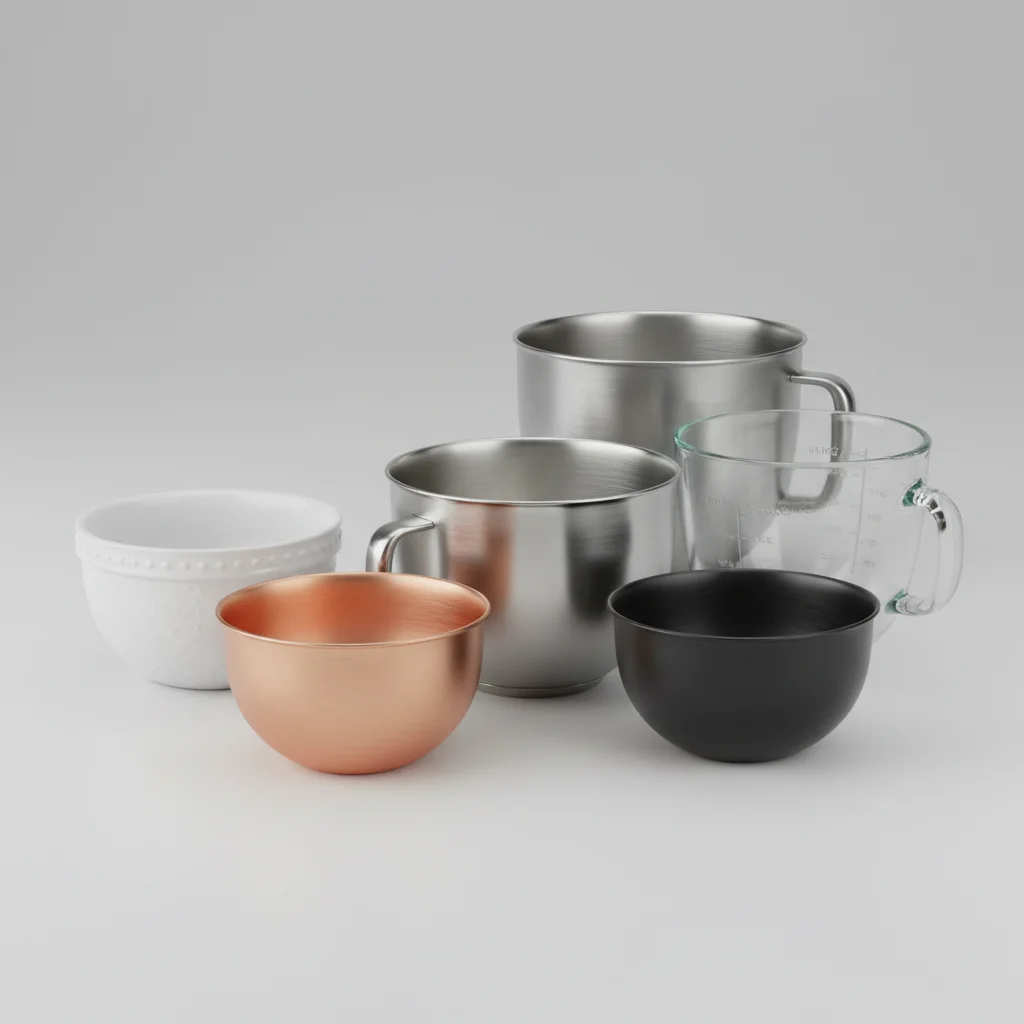
While it might seem convenient to mix and match, stand mixer bowls are generally not interchangeable across different brands due to variations in design, locking mechanisms, and overall dimensions. There are a few rare exceptions, but for the most part, you’ll need to stick with bowls specifically designed for your stand mixer’s make and model to ensure proper fit and safe operation.
Why Stand Mixer Bowls Aren’t Universal
The primary reason for this lack of interchangeability lies in the unique engineering of each stand mixer brand. Manufacturers design their bowls to perfectly align with their specific mixer’s bowl-lift or tilt-head mechanism, as well as the planetary action of the beater. This includes the diameter of the bowl, the height, the shape of the base, and the specific locking tabs or grooves that secure it to the mixer. Even a slight discrepancy can prevent the bowl from locking in place or cause the beater to scrape the sides or bottom, leading to damage or inefficient mixing. For explore our stand mixer reviews on this site.
Another factor is the material and thickness of the bowl itself. While many are stainless steel, some brands offer glass or ceramic options, each with specific weight and structural considerations that influence the mixer’s balance and operation. Attempting to force a non-compatible bowl can strain the mixer’s motor or damage the bowl’s locking points.
Understanding Bowl-Lift vs. Tilt-Head Compatibility
It’s crucial to understand that bowls are not even universally interchangeable between bowl-lift and tilt-head models within the same brand. Tilt-head mixers typically use bowls with a flared rim that locks into clips on the base, allowing the head to tilt back. Bowl-lift mixers, on the other hand, use bowls with pins or grooves that fit into arms on the mixer base, which are then raised into position. These two designs are fundamentally different and require distinct bowl types.
Even if a bowl from a different brand appears to fit, it might not sit at the correct height for the beater to properly reach the ingredients. This can result in unmixed ingredients at the bottom of the bowl or the beater hitting the bowl, causing wear and tear on both the attachment and the bowl itself.
When Are There Exceptions?
|
Our Picks for the Best Stand Mixer in 2026
As an Amazon Associate I earn from qualifying purchases.
|
||
| Num | Product | Action |
|---|---|---|
| 1 | Stand Mixer, 6.5QT 10-Speed Tilt-Head Electric Stand Mixer, 3-In-1 Kitchen Mixer with Bowl, Dough Hook, Whisk and Beater, Food Mixer for Baking, Cake and Most Home Cooks, Pink |

|
| 2 | Stand Mixer, 9-Quart Stainless Steel Bowl, 660W Professional Power, Multiple Speed Options, Sturdy Design, Easy to Clean, Lifetime Support, SM-1550(Caramel) |
|
| 3 | 3-IN-1 Electric Stand Mixer, 6.5QT Bowl 660W 10-Speed Kitchen Mixer, Household Food Mixers include Dough Hook, Beater and Whisk, Bread Cake Mixer for Baking and Most Home Cooks, Green |
|
| 4 | Cuisinart Stand Mixer, 12 Speed, 5.5 Quart Stainless Steel Bowl, Chef’s Whisk, Mixing Paddle, Dough Hook, Splash Guard w/ Pour Spout, Periwinkle Blue, SM-50TQNAS |
|
| 5 | Hamilton Beach Electric Stand Mixer, 4 Quarts, Dough Hook, Flat Beater Attachments, Splash Guard, 7 Speeds with Whisk, Easy-Carry Top Handle, Aqua |
|
| 6 | Stand Mixer, 6QT Electric Kitchen Mixer for Baking Cakes & Dough, LED Smart Touchscreen, 11-Speed Tilt-Head & Timer, 4 Presets, Mixer with Bowl, Dough Hook/Whisk/Beater, Green |
|
| 7 | 8.45 QT All Metal Stand Mixer,10 Speed Large Capacity Kitchen Mixer with Digital Timer & Tilt-Head, Electric Mixer with Whisk Dough Hook Mixing Beater for Baking,Cakes,Cookie,Bread,Salad(Silver) |
|
| 8 | Mini Angel Stand Mixer,10-Speed 5QT Kitchen Electric Mixer,Tilt-Head Food Mixer with Dough Hook, Wire Whisk, Flat Beater, Stainless Steel Bowl (Silver) |
|
| 9 | Stand Mixer, 6 QT 600W Tilt-Head Dough Mixer, 6+P speed Mixers Kitchen Electric Stand Mixer with Stainless Steel Bowl, Dishwasher-Safe Dough Hook, Flat Beater, Wire Whisk, Splash Guard, Grey |
|
| 10 | Hamilton Beach Electric Stand Mixer, 4 Quarts, Dough Hook, Flat Beater Attachments, Splash Guard, 7 Speeds with Whisk, Easy-Carry Top Handle, Blue |
|
While rare, some third-party manufacturers produce “compatible” bowls designed to fit specific popular stand mixer brands. These are often explicitly marketed as such and have undergone testing to ensure proper fit and function. However, even with these, it’s essential to verify compatibility with your exact model number. Additionally, some very old or niche mixers might have a more generic bowl design, but this is increasingly uncommon with modern appliances.
Another exception might be if a brand offers a range of accessories that are designed to be cross-compatible within their own ecosystem, but this is still limited to that specific brand. Always consult your mixer’s manual or the manufacturer’s website for official compatibility information before purchasing any third-party or alternative bowls.
- Always check your mixer’s model number for compatibility.
- Prioritize bowls from your mixer’s original manufacturer.
- Be wary of generic claims of “universal fit.”
- Consider the material and design (tilt-head vs. bowl-lift).
- Improper fit can damage your mixer or bowl.
The Risks of Using Non-Compatible Bowls
Using a stand mixer bowl that isn’t designed for your specific model carries several risks. The most immediate is inefficient mixing, where ingredients aren’t properly incorporated due to incorrect beater clearance. More seriously, an ill-fitting bowl can become dislodged during operation, creating a safety hazard and potentially damaging the mixer’s motor, gears, or the bowl itself. The constant stress of an improperly seated bowl can also lead to premature wear on the mixer’s locking mechanism.
Furthermore, using non-approved accessories can sometimes void your mixer’s warranty. Manufacturers design their products to work optimally and safely with their own components. If a malfunction occurs due to a third-party bowl, you might find yourself without coverage for repairs or replacement. It’s always best to invest in the correct bowl for your mixer to ensure longevity and safe operation.
Finding the Right Replacement or Additional Bowl
If you need a replacement or an additional bowl for your stand mixer, the safest and most reliable approach is to purchase one directly from your mixer’s manufacturer or an authorized dealer. They will have the exact specifications for your model. If you’re looking for a different material, such as a glass bowl instead of stainless steel, ensure that the manufacturer offers that option for your specific mixer. Always double-check the product description and compatibility list before making a purchase.
Get our weekly buyer guide
Practical specs, not advice. Unsubscribe anytime.
