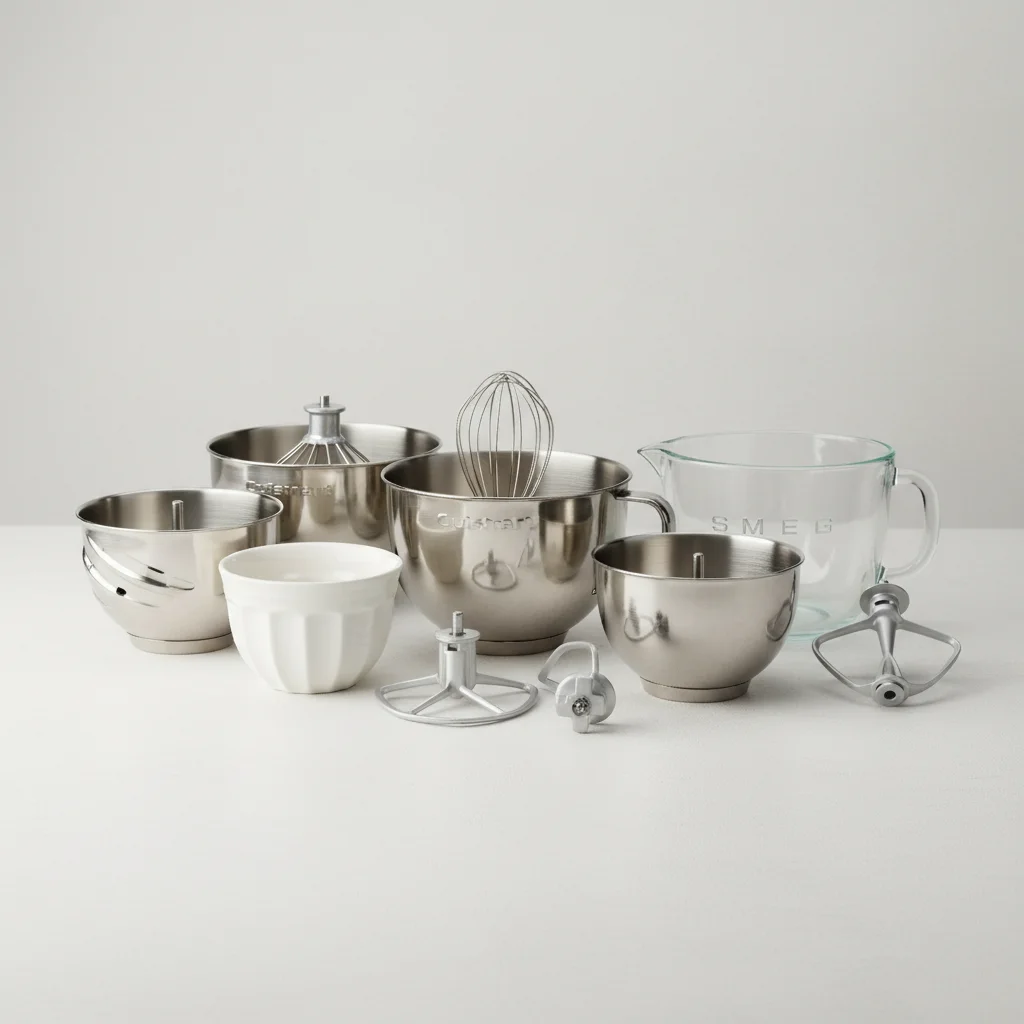
While it might seem convenient to swap stand mixer bowls between different brands, the reality is that stand mixer bowls are generally not interchangeable across brands. There are several critical factors that prevent universal compatibility, primarily related to the bowl’s locking mechanism, size, and the specific design of the mixer’s planetary action.
The primary reason for this lack of interchangeability lies in the unique locking mechanisms each manufacturer employs. KitchenAid, for example, uses a specific twist-and-lock or clip-in system that is proprietary to their models. Other brands like Cuisinart, Breville, or Smeg have their own distinct methods for securing the bowl to the mixer base. These differences mean a bowl designed for one brand simply won’t fit or securely attach to another. For expert stand mixer reviews on this site.
Understanding Bowl Locking Mechanisms
Every stand mixer brand designs its bowls with a specific locking mechanism to ensure stability during operation. For tilt-head mixers, this often involves a base that the bowl twists into, with specific indentations or clips. Bowl-lift models, on the other hand, typically feature arms that cradle the bowl, requiring specific rim designs and attachment points. These variations are not arbitrary; they are engineered to provide a secure fit, prevent wobbling, and ensure the mixer operates safely and efficiently.
Attempting to force a bowl from one brand onto another can damage both the bowl and the mixer’s base, potentially voiding warranties and creating a safety hazard. The precision required for the planetary action to properly reach all parts of the bowl also necessitates a perfectly fitted bowl.
Size and Design Variations
Beyond the locking mechanism, stand mixer bowls vary significantly in their overall dimensions, including diameter, height, and the shape of their base. Even if you could somehow bypass the locking issue, a bowl from a 5-quart KitchenAid would likely not fit correctly into a 7-quart Cuisinart mixer due to these size discrepancies. The mixer’s head or arms are designed to accommodate a specific bowl profile, ensuring the attachments (whisk, paddle, dough hook) can reach the bottom and sides of the bowl effectively.
Furthermore, the material and construction of bowls can differ. While stainless steel is common, some brands offer glass or ceramic options, each with specific weight and structural considerations that are factored into the mixer’s design.
Why Manufacturers Don’t Standardize Bowls
|
Our Picks for the Best Stand Mixer in 2026
As an Amazon Associate I earn from qualifying purchases.
|
||
| Num | Product | Action |
|---|---|---|
| 1 | Stand Mixer, 6 QT 600W Tilt-Head Dough Mixer, 6+P speed Mixers Kitchen Electric Stand Mixer with Stainless Steel Bowl, Dishwasher-Safe Dough Hook, Flat Beater, Wire Whisk, Splash Guard, Grey |

|
| 2 | Hamilton Beach Electric Stand Mixer, 4 Quarts, Dough Hook, Flat Beater Attachments, Splash Guard, 7 Speeds with Whisk, Easy-Carry Top Handle, Aqua |
|
| 3 | 8.45 QT All Metal Stand Mixer,10 Speed Large Capacity Kitchen Mixer with Digital Timer & Tilt-Head, Electric Mixer with Whisk Dough Hook Mixing Beater for Baking,Cakes,Cookie,Bread,Salad(Silver) |
|
| 4 | Stand Mixer, 6.5QT 10-Speed Tilt-Head Electric Stand Mixer, 3-In-1 Kitchen Mixer with Bowl, Dough Hook, Whisk and Beater, Food Mixer for Baking, Cake and Most Home Cooks, Pink |
|
| 5 | Stand Mixer, 6QT Electric Kitchen Mixer for Baking Cakes & Dough, LED Smart Touchscreen, 11-Speed Tilt-Head & Timer, 4 Presets, Mixer with Bowl, Dough Hook/Whisk/Beater, Green |
|
| 6 | Mini Angel Stand Mixer,10-Speed 5QT Kitchen Electric Mixer,Tilt-Head Food Mixer with Dough Hook, Wire Whisk, Flat Beater, Stainless Steel Bowl (Silver) |
|
| 7 | Hamilton Beach Electric Stand Mixer, 4 Quarts, Dough Hook, Flat Beater Attachments, Splash Guard, 7 Speeds with Whisk, Easy-Carry Top Handle, Blue |
|
| 8 | Stand Mixer, 9-Quart Stainless Steel Bowl, 660W Professional Power, Multiple Speed Options, Sturdy Design, Easy to Clean, Lifetime Support, SM-1550(Caramel) |
|
| 9 | 3-IN-1 Electric Stand Mixer, 6.5QT Bowl 660W 10-Speed Kitchen Mixer, Household Food Mixers include Dough Hook, Beater and Whisk, Bread Cake Mixer for Baking and Most Home Cooks, Green |
|
| 10 | Cuisinart Stand Mixer, 12 Speed, 5.5 Quart Stainless Steel Bowl, Chef’s Whisk, Mixing Paddle, Dough Hook, Splash Guard w/ Pour Spout, Periwinkle Blue, SM-50TQNAS |
|
The lack of standardization in stand mixer bowls is a combination of proprietary design, brand differentiation, and engineering specifics. Each manufacturer invests in research and development to create a cohesive system where the mixer, bowl, and attachments work together seamlessly. Standardizing bowls would require a universal design that might compromise the unique features or performance aspects that brands use to distinguish their products.
Moreover, the aftermarket for accessories, including bowls, is a significant part of a brand’s ecosystem. By keeping designs proprietary, manufacturers ensure that consumers purchase their branded accessories, which are guaranteed to be compatible and maintain the mixer’s performance and warranty.
When Are Bowls Interchangeable?
The only time stand mixer bowls are interchangeable is within the same brand and often within the same series or model line. For example, certain KitchenAid tilt-head models might share compatible bowls, especially if they are of the same capacity. However, even within a single brand, a bowl designed for a tilt-head mixer will not fit a bowl-lift mixer, and vice-versa, due to fundamental differences in their design.
- Within the same brand and series: Some models from the same manufacturer might share bowl compatibility.
- Same capacity and design type: A 5-quart tilt-head bowl might fit another 5-quart tilt-head from the same brand.
- Specific accessory lines: Certain specialty bowls (e.g., ice cream maker bowls) are designed for specific mixer models within a brand.
- Never across different brands: Universal interchangeability does not exist.
- Check your mixer’s manual: Always refer to your mixer’s user manual for compatible accessories.
Finding the Right Replacement or Additional Bowl
If you need a replacement bowl or wish to purchase an additional one for your stand mixer, the safest and most reliable approach is to buy one specifically designed for your mixer’s brand and model. Most manufacturers offer a range of bowls, including different materials (stainless steel, glass, ceramic) and capacities, that are guaranteed to fit your specific machine.
Before making a purchase, always verify the model number of your stand mixer and cross-reference it with the product description of the bowl. This ensures you get a perfectly fitting and functional accessory that will extend the utility of your mixer without any compatibility headaches.
Get our weekly buyer guide
Practical specs, not advice. Unsubscribe anytime.
