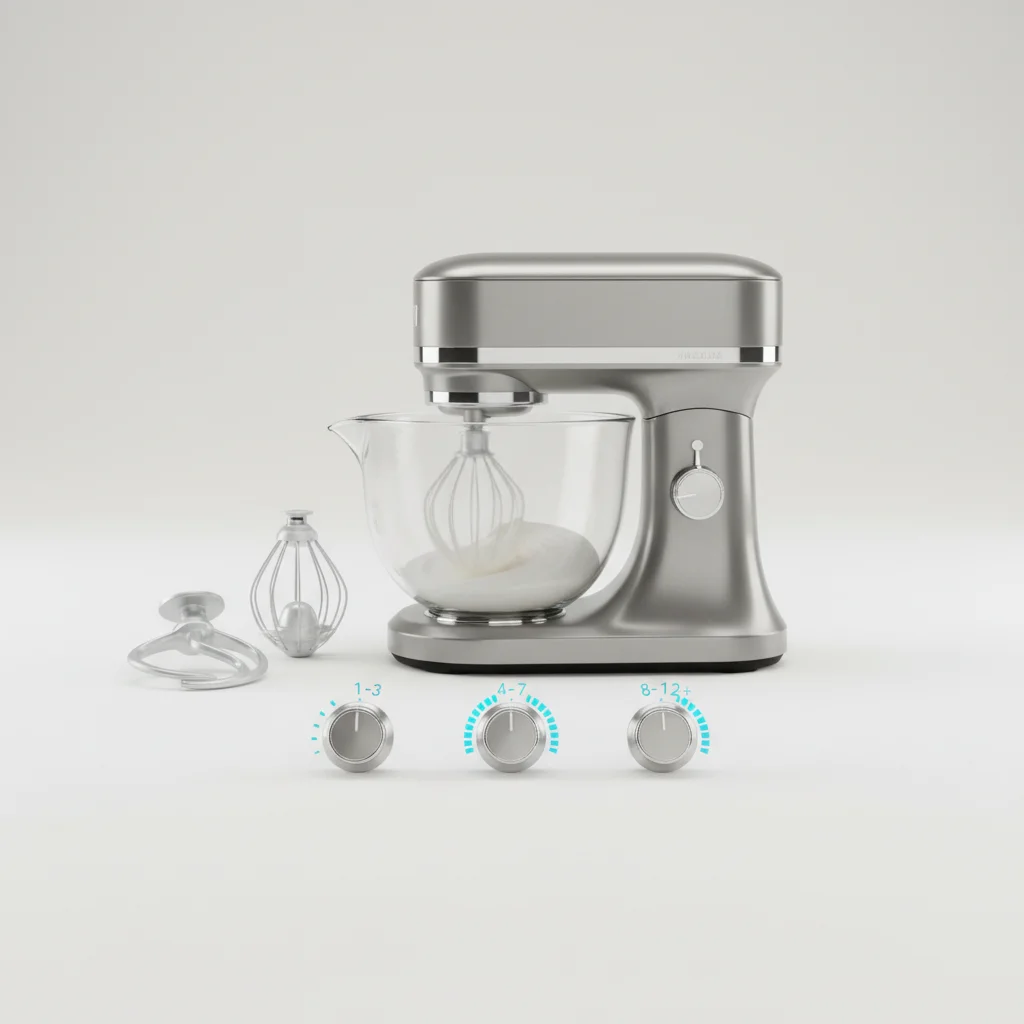
When it comes to stand mixers, the number of speeds available can seem overwhelming, but for most home bakers, a stand mixer with 6 to 12 speeds offers the optimal range for versatility and control. This range allows for everything from gentle stirring to vigorous whipping, covering nearly all baking tasks without unnecessary complexity.
Understanding Stand Mixer Speed Ranges
Stand mixers typically offer a range of speeds, from as few as 3 to as many as 16 or more. Lower speeds are crucial for incorporating dry ingredients without creating a cloud of flour, or for gently folding in delicate components like egg whites. These slower settings prevent overmixing, which can lead to tough baked goods. Conversely, higher speeds are essential for aerating mixtures, such as whipping cream, meringue, or light batters, where maximum volume is desired.
Many modern stand mixers also feature a ‘soft start’ or ‘fold’ setting, which is an ultra-low speed designed to gradually increase power, preventing splashes and ensuring ingredients are thoroughly combined before ramping up. This feature is particularly useful for delicate recipes or when adding ingredients mid-mix.
Why More Speeds Aren’t Always Better
While it might seem logical that more speeds equate to better performance, this isn’t always the case. A stand mixer with an excessive number of speeds can sometimes make it harder to find the precise setting you need, leading to decision fatigue. What’s more important than the sheer quantity of speeds is the quality of the motor and the distinctiveness between each speed setting. A mixer with fewer, well-defined speeds that offer clear differences in power can be more effective and user-friendly than one with many indistinguishable increments.
For instance, a mixer with 6 distinct speeds that cover the full spectrum of baking needs will often outperform a 16-speed model where many settings feel redundant. Focus on the practical application of each speed rather than just the total count.
Key Speed Settings for Common Baking Tasks
|
Our Picks for the Best Stand Mixer in 2026
As an Amazon Associate I earn from qualifying purchases.
|
||
| Num | Product | Action |
|---|---|---|
| 1 | Cuisinart Stand Mixer, 12 Speed, 5.5 Quart Stainless Steel Bowl, Chef’s Whisk, Mixing Paddle, Dough Hook, Splash Guard w/ Pour Spout, Periwinkle Blue, SM-50TQNAS |

|
| 2 | 3-IN-1 Electric Stand Mixer, 6.5QT Bowl 660W 10-Speed Kitchen Mixer, Household Food Mixers include Dough Hook, Beater and Whisk, Bread Cake Mixer for Baking and Most Home Cooks, Green |
|
| 3 | Stand Mixer, 6.5QT 10-Speed Tilt-Head Electric Stand Mixer, 3-In-1 Kitchen Mixer with Bowl, Dough Hook, Whisk and Beater, Food Mixer for Baking, Cake and Most Home Cooks, Pink |
|
| 4 | Stand Mixer, 9-Quart Stainless Steel Bowl, 660W Professional Power, Multiple Speed Options, Sturdy Design, Easy to Clean, Lifetime Support, SM-1550(Caramel) |
|
| 5 | Hamilton Beach Electric Stand Mixer, 4 Quarts, Dough Hook, Flat Beater Attachments, Splash Guard, 7 Speeds with Whisk, Easy-Carry Top Handle, Aqua |
|
| 6 | Hamilton Beach Electric Stand Mixer, 4 Quarts, Dough Hook, Flat Beater Attachments, Splash Guard, 7 Speeds with Whisk, Easy-Carry Top Handle, Blue |
|
| 7 | Stand Mixer, 6 QT 600W Tilt-Head Dough Mixer, 6+P speed Mixers Kitchen Electric Stand Mixer with Stainless Steel Bowl, Dishwasher-Safe Dough Hook, Flat Beater, Wire Whisk, Splash Guard, Grey |
|
| 8 | Stand Mixer, 6QT Electric Kitchen Mixer for Baking Cakes & Dough, LED Smart Touchscreen, 11-Speed Tilt-Head & Timer, 4 Presets, Mixer with Bowl, Dough Hook/Whisk/Beater, Green |
|
| 9 | Mini Angel Stand Mixer,10-Speed 5QT Kitchen Electric Mixer,Tilt-Head Food Mixer with Dough Hook, Wire Whisk, Flat Beater, Stainless Steel Bowl (Silver) |
|
| 10 | 8.45 QT All Metal Stand Mixer,10 Speed Large Capacity Kitchen Mixer with Digital Timer & Tilt-Head, Electric Mixer with Whisk Dough Hook Mixing Beater for Baking,Cakes,Cookie,Bread,Salad(Silver) |
|
To help you navigate the world of stand mixer speeds, here’s a breakdown of essential settings and their uses:
- Speed 1-2 (Stir/Fold): Ideal for gently combining dry ingredients, incorporating flour into wet mixtures, or folding in delicate components.
- Speed 3-4 (Mix/Beat): Perfect for creaming butter and sugar, mixing cookie dough, or combining cake batters.
- Speed 5-6 (Whip/Aeration): Best for whipping egg whites into stiff peaks, making meringue, or whipping cream.
- Speed 7-8+ (Knead/High Whip): Used for kneading bread dough (if applicable) or for very rapid aeration when maximum volume is required.
Understanding these core functions will help you make the most of your stand mixer, regardless of the exact number of speeds it possesses.
Variable Speed Control and Planetary Action
Beyond the number of speeds, consider the type of speed control. Many high-quality stand mixers feature electronic variable speed control, which maintains consistent power even as the load on the motor changes. This means your mixer won’t slow down significantly when tackling a thick dough, ensuring even mixing throughout the process. This consistency is a hallmark of professional-grade machines and greatly impacts the final texture of your baked goods.
Another important factor is planetary mixing action, where the beater rotates in one direction while orbiting in the other. This ensures that the entire bowl is covered, scraping the sides and bottom to incorporate all ingredients thoroughly. Combined with effective speed settings, planetary action is crucial for achieving uniform results, preventing unmixed pockets of ingredients, and reducing the need for manual scraping.
Choosing the Right Stand Mixer for Your Needs
Ultimately, the ‘right’ number of stand mixer speeds depends on your individual baking habits and the complexity of the recipes you typically prepare. For casual bakers, a mixer with 6-8 well-defined speeds will likely suffice. More ambitious bakers who frequently tackle a wide range of recipes, from delicate mousses to dense bread doughs, might benefit from a model offering 10-12 speeds with precise control. Prioritize a robust motor and clear distinctions between speed settings over a high, potentially redundant, number of options.
Get our weekly buyer guide
Practical specs, not advice. Unsubscribe anytime.
