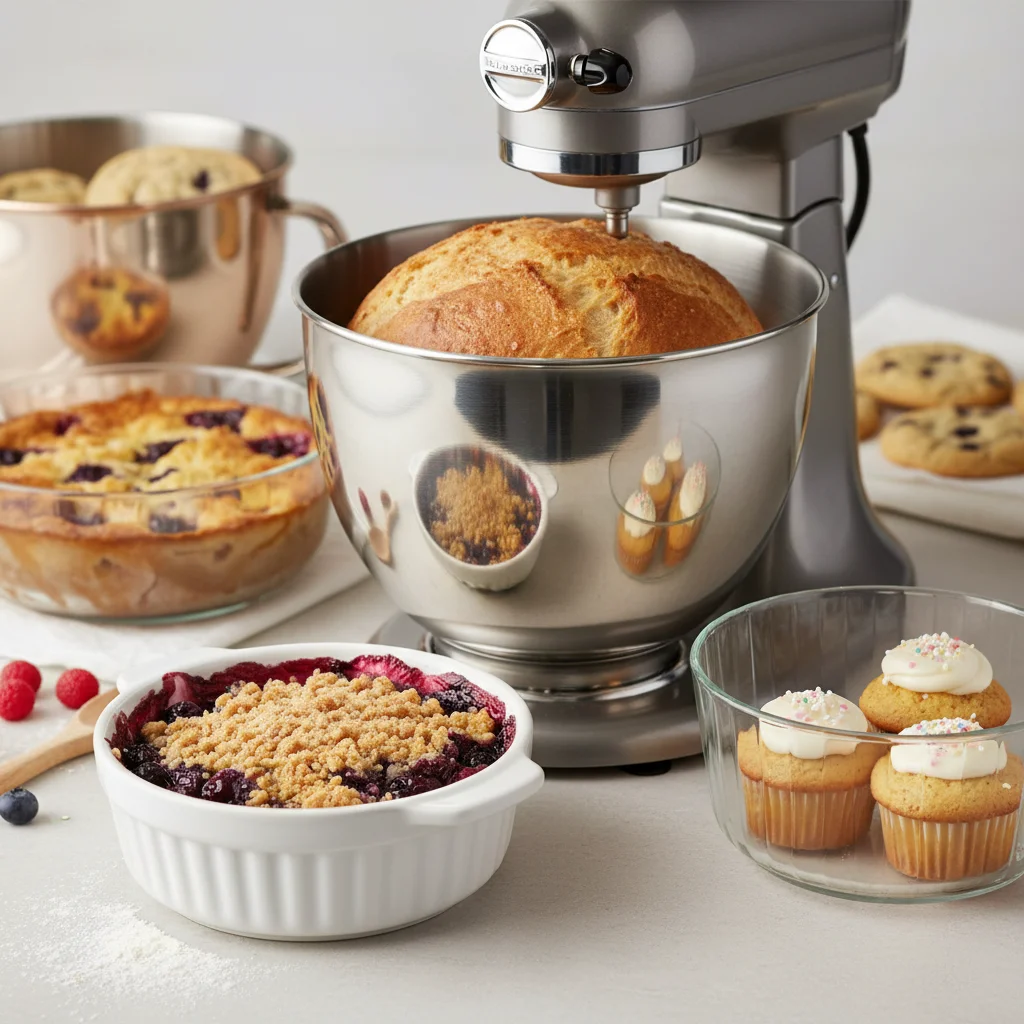
While stand mixer bowls are primarily designed for mixing ingredients, some can indeed be used for baking, but it depends entirely on the material of the bowl. Specifically, glass and ceramic stand mixer bowls are generally safe for oven use, while stainless steel and plastic bowls are not. Understanding the material composition of your stand mixer bowl is crucial before attempting to use it in an oven to prevent damage to the bowl or potential hazards.
Glass Stand Mixer Bowls for Baking
Glass stand mixer bowls, often made from tempered glass, are excellent candidates for oven use. Tempered glass is designed to withstand significant temperature changes, making it suitable for baking applications. Many manufacturers specifically design their glass bowls to be oven-safe, allowing for seamless transitions from mixing dough to baking a small cake or bread directly in the bowl. Always check the manufacturer’s instructions or the bottom of the bowl for an oven-safe symbol or explicit temperature limits before placing it in a hot oven. Typically, these bowls can handle temperatures up to 350-400°F (175-200°C).
Ceramic Stand Mixer Bowls and Oven Use
Similar to glass, ceramic stand mixer bowls are often oven-safe. Ceramic is a durable material that can withstand high temperatures, making it a versatile option for both mixing and baking. These bowls are particularly popular for their aesthetic appeal and their ability to distribute heat evenly, which can be beneficial for certain baking tasks. As with glass bowls, it is imperative to verify the manufacturer’s guidelines for oven safety and maximum temperature ratings. Some ceramic bowls may have decorative glazes that are not suitable for high heat, so always err on the side of caution and consult the product specifications.
Why Stainless Steel and Plastic Bowls Are Not Oven-Safe
|
Our Picks for the Best Stand Mixer in 2026
As an Amazon Associate I earn from qualifying purchases.
|
||
| Num | Product | Action |
|---|---|---|
| 1 | Stand Mixer, 9-Quart Stainless Steel Bowl, 660W Professional Power, Multiple Speed Options, Sturdy Design, Easy to Clean, Lifetime Support, SM-1550(Caramel) |

|
| 2 | 3-IN-1 Electric Stand Mixer, 6.5QT Bowl 660W 10-Speed Kitchen Mixer, Household Food Mixers include Dough Hook, Beater and Whisk, Bread Cake Mixer for Baking and Most Home Cooks, Green |
|
| 3 | Cuisinart Stand Mixer, 12 Speed, 5.5 Quart Stainless Steel Bowl, Chef’s Whisk, Mixing Paddle, Dough Hook, Splash Guard w/ Pour Spout, Periwinkle Blue, SM-50TQNAS |
|
| 4 | Mini Angel Stand Mixer,10-Speed 5QT Kitchen Electric Mixer,Tilt-Head Food Mixer with Dough Hook, Wire Whisk, Flat Beater, Stainless Steel Bowl (Silver) |
|
| 5 | Hamilton Beach Electric Stand Mixer, 4 Quarts, Dough Hook, Flat Beater Attachments, Splash Guard, 7 Speeds with Whisk, Easy-Carry Top Handle, Aqua |
|
| 6 | Stand Mixer, 6QT Electric Kitchen Mixer for Baking Cakes & Dough, LED Smart Touchscreen, 11-Speed Tilt-Head & Timer, 4 Presets, Mixer with Bowl, Dough Hook/Whisk/Beater, Green |
|
| 7 | Stand Mixer, 6 QT 600W Tilt-Head Dough Mixer, 6+P speed Mixers Kitchen Electric Stand Mixer with Stainless Steel Bowl, Dishwasher-Safe Dough Hook, Flat Beater, Wire Whisk, Splash Guard, Grey |
|
| 8 | 8.45 QT All Metal Stand Mixer,10 Speed Large Capacity Kitchen Mixer with Digital Timer & Tilt-Head, Electric Mixer with Whisk Dough Hook Mixing Beater for Baking,Cakes,Cookie,Bread,Salad(Silver) |
|
| 9 | Stand Mixer, 6.5QT 10-Speed Tilt-Head Electric Stand Mixer, 3-In-1 Kitchen Mixer with Bowl, Dough Hook, Whisk and Beater, Food Mixer for Baking, Cake and Most Home Cooks, Pink |
|
| 10 | Hamilton Beach Electric Stand Mixer, 4 Quarts, Dough Hook, Flat Beater Attachments, Splash Guard, 7 Speeds with Whisk, Easy-Carry Top Handle, Blue |
|
Stainless steel stand mixer bowls, while incredibly durable and popular for mixing, are generally not recommended for oven use. While stainless steel itself can withstand high temperatures, the construction of many stand mixer bowls, including their handles or bases, may contain components that are not oven-safe. More importantly, stainless steel can conduct heat very quickly and unevenly, potentially leading to uneven baking or even warping of the bowl. Plastic stand mixer bowls, on the other hand, are unequivocally not oven-safe. Plastic will melt or warp at oven temperatures, releasing harmful chemicals and ruining both the bowl and your baked goods. Always keep plastic bowls away from direct heat sources like ovens.
Tips for Baking with Oven-Safe Stand Mixer Bowls
- Always preheat your oven to the desired temperature before placing the bowl inside.
- Use oven mitts when handling hot bowls to prevent burns.
- Avoid extreme temperature changes; do not place a hot bowl directly into cold water or vice versa.
- Ensure the bowl is clean and free of any food residue before baking.
- Consider using a baking sheet underneath the bowl for added stability and to catch any potential spills.
Using an oven-safe stand mixer bowl can streamline your baking process, reducing the number of dishes you need to wash. It’s particularly convenient for recipes where the dough or batter is mixed and then baked in the same vessel, such as certain quick breads or small casseroles. This versatility adds significant value to your kitchen tools, making your stand mixer even more indispensable.
Alternative Baking Vessels if Your Bowl Isn’t Oven-Safe
If your stand mixer bowl is not oven-safe, there are plenty of other excellent options for baking. Standard baking dishes made from glass, ceramic, or metal are readily available and designed specifically for oven use. These include loaf pans, cake pans, casserole dishes, and pie plates. Always ensure you are using the correct type and size of baking vessel for your recipe to achieve the best results. Investing in a good set of dedicated baking pans is a wise choice for any home baker, ensuring you always have the right tool for the job, regardless of your stand mixer bowl’s material.
Get our weekly buyer guide
Practical specs, not advice. Unsubscribe anytime.

Such a practical tip! I love the idea of using my tempered glass bowl for baking. It saves so much time and cleanup, especially when I’m making something like a quick bread or a small cake. I always check for the oven-safe label now, but it’s great to understand why certain materials work better than others.
This was really helpful! I have a ceramic bowl for my stand mixer and I’ve used it for small casseroles before, but I wasn’t sure if it was truly recommended for baking. Knowing that ceramic is generally oven-safe gives me peace of mind. I’ll definitely be trying out some more recipes that go straight from mixer to oven.
Good info, but I was a bit disappointed that my stainless steel bowl isn’t oven-safe. I mostly bake bread and was hoping to proof and bake in the same bowl. Guess I’ll stick to my usual method. Still, it’s good to know for sure what materials are safe and which aren’t.
I’ve always wondered about this! I have a KitchenAid with a glass bowl and I’ve been hesitant to try baking in it. After reading this, I feel much more confident. It’s so convenient to go from mixing a small batch of brownies right into the oven without dirtying another dish. Definitely a game-changer for my baking routine.